Table of Contents
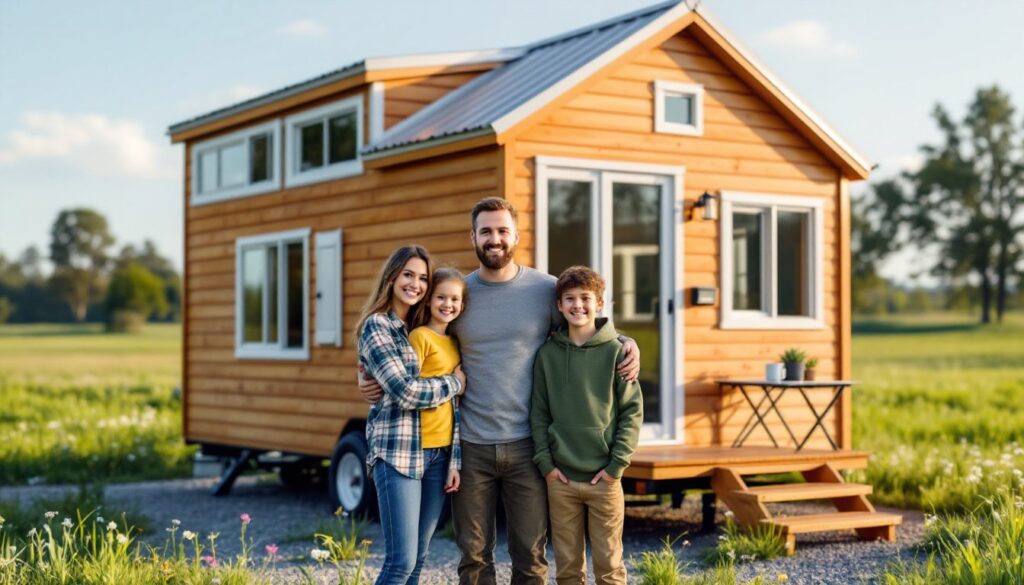
ToggleCramming four people into a home under 400 square feet sounds like a recipe for chaos. Yet thousands of families are doing exactly that, and many aren’t looking back. The tiny house movement isn’t just for minimalist couples anymore. Families with two kids are downsizing into homes smaller than most two-car garages, trading square footage for financial freedom, simplified routines, and closer family bonds. But let’s be blunt: it’s not for everyone. The logistics are real, the compromises are daily, and the learning curve is steep. This guide walks through the practical realities, space planning, layout tricks, and honest challenges, so families can decide if tiny living is a dream worth chasing or a Pinterest fantasy best left on the board.
Key Takeaways
- A tiny house family of 4 typically requires 280–400 square feet with dual-purpose furniture, sleeping lofts, and integrated storage to maximize every inch of space.
- Financial benefits are substantial: tiny houses cost $30,000–$80,000 versus median U.S. home prices, while utility bills drop 50–70% and mortgage debt can be eliminated.
- Privacy and noise management require intentional design solutions like loft curtains, acoustic panels, white noise machines, and established quiet zones by time rather than space.
- Success demands daily organization habits: a “one in, one out” rule, nightly 10-minute resets, and meal planning to prevent clutter from overwhelming the compact layout.
- Teenagers often become the breaking point for tiny house families, typically requiring an outbuilding, transition to larger homes, or part-time stays with relatives as they grow older.
- Zoning and permit laws remain unpredictable across U.S. counties, so families must research local codes thoroughly and may need legal consultation before establishing a tiny house as a primary residence.
Why Families Are Choosing Tiny House Living
The financial math is compelling. A tiny house typically costs between $30,000 and $80,000 to build or buy, a fraction of the median U.S. home price. Families slash or eliminate mortgage debt, drop utility bills by 50-70%, and reduce property taxes to near zero if they own their land outright.
But money isn’t the only driver. Many families cite environmental impact as a primary motivation. A smaller footprint means less energy consumption, fewer materials, and reduced waste. Solar panels and composting toilets become practical, not aspirational.
There’s also the lifestyle shift. Families report spending more time outdoors, engaging in shared activities instead of retreating to separate rooms. Kids grow up with fewer possessions but more experiences, camping trips, road travel, and hands-on tiny house construction skills. The forced proximity can strengthen relationships or reveal incompatibilities quickly.
Some families use tiny living as a stepping stone. They park a tiny house on family land while saving for a conventional home, or test the waters before committing to a permanent downsize. Others go all-in, selling everything and hitting the road full-time. Both approaches require honest conversations about what each family member is willing to sacrifice.
Space Requirements for a Family of Four
Most tiny house families with two kids aim for 280 to 400 square feet of interior space. Anything under 250 square feet forces compromises that verge on impractical for long-term living. Above 450 square feet, the home starts losing the efficiency benefits and may require a specialized towing setup if it’s on wheels.
Ceiling height matters as much as floor area. Building codes (IRC Appendix Q for tiny houses) allow sleeping lofts with as little as 3 feet of headroom, but adults need at least 6’4″ in main living areas. Many families opt for a gooseneck trailer design, which adds a raised section over the hitch for a master loft with near-full standing height.
For a family of four, the layout typically includes:
- Two sleeping lofts (one for parents, one for kids) accessed by ladder or alternating-tread stairs
- Main floor living/dining area that converts for multiple uses
- Kitchen galley with 4-6 feet of counter space and a compact refrigerator (10-12 cubic feet)
- Bathroom with a standard or composting toilet, corner shower (30″x30″ minimum), and small vanity
- Storage integrated into stairs, under seating, and in vertical cubbies
Some families building permanent tiny homes on foundations choose a THOW (Tiny House On Wheels) design anyway to avoid minimum square footage requirements in residential zones. Others go with a park model RV certified under ANSI 119.5, which allows up to 400 square feet plus lofts. Check local zoning, many jurisdictions still don’t recognize tiny houses as legal primary dwellings.
Ventilation becomes critical with four people. The IRC requires mechanical ventilation or operable windows equaling 4% of floor area. In a 350-square-foot home, that’s 14 square feet of window, about three standard 30″x48″ double-hungs. Many builders add a bathroom exhaust fan rated at 50+ CFM and a range hood to manage cooking moisture.
Smart Layout and Design Solutions
Every square inch earns its keep in a tiny house. Successful family layouts rely on dual-purpose design and aggressive vertical storage.
Multi-Functional Furniture and Storage Hacks
The dining table is never just a dining table. It folds down from the wall (a wall-mounted drop-leaf works), slides out from under the kitchen counter, or converts from a coffee table with a lift-top mechanism. Bench seating around it hides storage bins underneath, 12-18 inches of depth is enough for board games, linens, or off-season clothes.
Murphy beds on the main floor give families an alternative to loft sleeping. A horizontal twin Murphy folds flush against the wall during the day, creating floor space for play or homeschooling. Some designs incorporate a fold-down desk on the bed’s exterior face.
Stairs beat ladders for safety and usability, especially with young kids. Alternating-tread stairs (sometimes called ship’s ladders) use a 10-11 inch run instead of the standard 10-inch minimum and take up about 3×6 feet of floor space. Each tread can be a drawer on slides, deep enough for shoes, tools, or pantry overflow. For a cleaner look, some families adapt the IKEA TROFAST system into stair risers, using the bins as pull-out storage.
Overhead storage runs along the ceiling perimeter. Install a continuous shelf 12-18 inches deep at 7 feet height, supported by L-brackets into wall studs spaced 16 inches on center. Use this for luggage, seasonal gear, and anything accessed less than monthly.
Clothing storage gets creative. Instead of dressers, many tiny house families use:
- Tension rods inside shallow closets with hanging organizers
- Vacuum bags for out-of-season clothes stored under beds or seating
- Capsule wardrobes that limit each family member to 30-40 items
Kitchen storage goes vertical with magnetic knife strips, pegboard pot racks, and pull-down shelving. A tambour door (rollup slat door) hides the dish rack and keeps visual clutter in check. Many builders skip upper cabinets in favor of open shelving, it’s cheaper, feels more spacious, and forces you to keep only what you use.
Privacy Considerations for Parents and Kids
Four people in 300 square feet means privacy is earned, not assumed. Physical separation is limited, so families rely on visual and acoustic barriers.
Loft curtains are the simplest fix. Heavy fabric or blackout panels on ceiling tracks or cables turn a loft into a semi-private bedroom. Some families install a lightweight pocket door at the loft entrance, though the added weight and complexity aren’t always worth it.
Sound travels. Everything in a tiny house is effectively one room, so conversations, snoring, and late-night reading all bleed together. Families combat this with:
- White noise machines or fans in each loft
- Acoustic panels (fabric-wrapped fiberglass) mounted on shared walls
- Rugs and soft furnishings to absorb sound reflection off hard surfaces
Establishing “quiet zones” by time rather than space works for some families. Parents get the main floor from 8-10 p.m. after kids are in lofts: kids get it from 3-5 p.m. after school. It requires coordination and respect for routines, which breaks down fast if family dynamics are already strained.
A surprising number of tiny house families add a small outbuilding within a year or two, a 10×12 shed for a home office, art studio, or teen retreat. This isn’t giving up on tiny living: it’s recognizing that thoughtful tiny home strategies often include outdoor or auxiliary spaces. Some communities now offer “tiny house clusters” with shared common buildings for exactly this reason.
Real-Life Challenges and How to Overcome Them
The honeymoon phase lasts about six weeks. Then the realities hit.
Clutter accumulates fast. With minimal storage, even a few days of lax tidying turns the space chaotic. Families who succeed carry out a “one in, one out” rule and do a nightly 10-minute reset. Designate a donation bin that lives outside the main house, when it’s full, it goes. Mail, school papers, and groceries are the usual culprits: countertop organizers and a strict “touch it once” sorting habit help.
Cooking for four in a tiny kitchen is tight but manageable. Most tiny house galleys include a two-burner cooktop, a countertop convection oven or microwave, and an apartment-size (18-inch) dishwasher or no dishwasher at all. Meal planning becomes essential. Batch cooking on weekends and using a slow cooker or Instant Pot reduces daily kitchen time. Outside grilling or a camp stove extends the workspace in good weather.
Laundry is a persistent headache. A combo washer/dryer unit (like those common in Europe) fits in a closet but takes 3-4 hours per load. Many families opt for a compact washer only and line-dry outside, or visit a laundromat weekly. If the tiny house is on family land, running laundry in the main house is a common workaround.
Schooling and work-from-home are doable but require boundaries. Families often invest in a multi-functional workspace that folds away, like a wall-mounted secretary desk or lap desks stored under seating. Noise-canceling headphones are non-negotiable. Some homeschooling families embrace the outdoor classroom, doing lessons at parks, libraries, or in the backyard.
Teenagers are the breaking point for many tiny house families. A 14-year-old who wants privacy, friends over, and a space to decompress won’t tolerate a 6×8 loft forever. Families either add an outbuilding, transition to a larger home, or send teens to stay with relatives part-time. There’s no shame in admitting the experiment has an expiration date.
Permits and legality remain murky. Even in 2026, many U.S. counties don’t allow tiny houses as primary residences unless they’re on a foundation and meet minimum square footage (often 600-1,000 square feet). RV parks sometimes accept THOWs, but residency rules vary. Some families live in a legal gray area, parking on private land “temporarily” for years. Research local codes thoroughly or consult a land-use attorney before committing.
Resale value is unpredictable. Custom-built tiny houses rarely recoup construction costs. Buyers want specific layouts, and what works for one family doesn’t for another. If flexibility matters, consider a park model RV design that retains more resale appeal.
Even though the hurdles, many families find the trade-offs worthwhile. The financial freedom funds experiences over possessions. The simplified routine reduces stress. And the forced closeness, love it or hate it, creates a family culture that’s hard to replicate in a 2,500-square-foot suburban home.
Conclusion
Tiny house living with four people isn’t a fairy tale, but it’s not impossible either. It demands intentional design, relentless organization, and a family culture that values experiences over square footage. The space constraints are real, the challenges are daily, and the learning curve never fully flattens. But for families willing to embrace the trade-offs, tiny living delivers financial freedom, environmental benefits, and a closeness that’s harder to find behind separate bedroom doors.