Table of Contents
ToggleA tiny house on a trailer isn’t just a scaled-down dwelling, it’s a complete rethink of how housing, mobility, and ownership intersect. These compact homes combine the freedom of an RV with the permanence of stick-built construction, appealing to everyone from minimalists to retirees to remote workers chasing lower costs and higher flexibility. But building or buying one involves navigating weight limits, zoning gray areas, and design trade-offs that don’t exist in traditional construction. This guide walks through the essentials: what defines a trailer-mounted tiny home, why people choose them, and the practical, legal, and structural realities you need to understand before committing to life on wheels.
Key Takeaways
- A tiny house on a trailer combines residential construction with mobility, typically weighing 10,000–15,000 pounds and ranging from 8–10 feet wide and 16–28 feet long, offering lower costs than traditional homes.
- Building a DIY tiny house on a trailer costs between $25,000–$50,000 compared to over $300,000 for a median U.S. home, making it an affordable option for minimalists, remote workers, and those seeking lifestyle flexibility.
- Zoning regulations present the biggest challenge for tiny house on a trailer owners, as most municipalities lack specific codes for these structures, so checking local ordinances and planning departments is essential before purchasing land.
- Weight distribution and proper braking systems are critical for safe towing—keep 10–15% of total weight on the hitch, install electric brakes, and use trailer-rated Load Range D or E tires to prevent blowouts.
- Maximize functionality in limited space by prioritizing must-haves like a full kitchen and comfortable sleeping area, using lofts or murphy beds, and employing vertical storage solutions like wall-mounted shelves and overhead cabinets.
- Specialty insurance for tiny houses costs $600–$1,200 annually and is harder to secure than traditional homeowners policies, so shop with insurers experienced in owner-built mobile dwellings.
What Is a Tiny House on a Trailer?
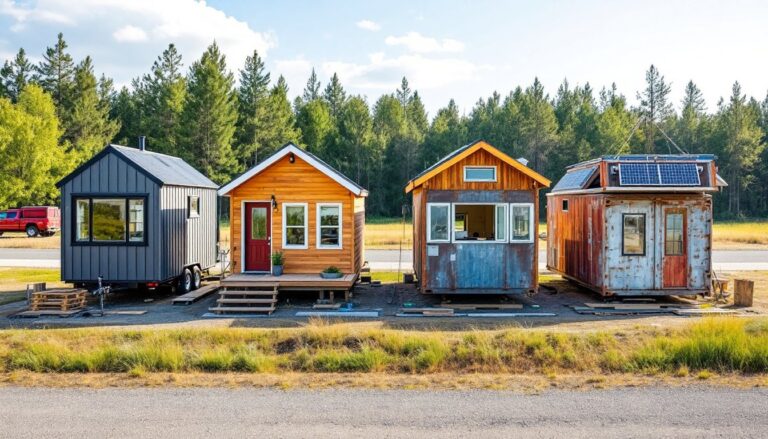
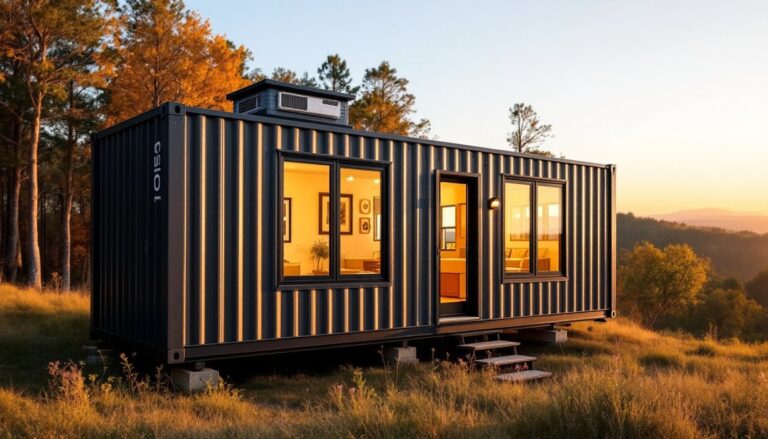
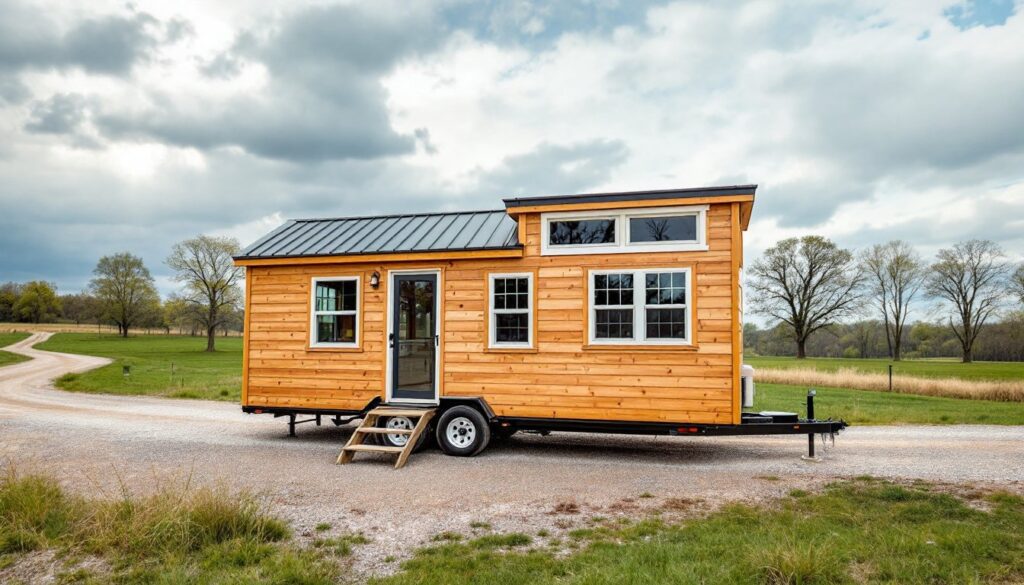
A tiny house on a trailer is a fully functional dwelling built on a road-legal trailer chassis, typically ranging from 8 to 10 feet wide and 16 to 28 feet long. Unlike RVs, which are manufactured to RVIA (Recreational Vehicle Industry Association) standards, these homes are constructed using conventional building materials, 2×4 or 2×6 framing, plywood sheathing, residential insulation, and standard roofing materials.
The key distinction is mobility. Because the structure sits on a trailer with axles, brakes, and a hitch, it can be towed (with the right vehicle and permits) to different locations. Most tiny houses on trailers weigh between 10,000 and 15,000 pounds when fully loaded, requiring a dual-axle gooseneck or bumper-pull trailer rated for the load.
These homes are not classified as RVs in most jurisdictions, which creates legal ambiguity. They’re also not permanent foundations, so they often fall outside traditional residential building codes. That flexibility is both an advantage and a complication, depending on where and how the owner intends to use the home.
Why Choose a Tiny House on Wheels Over a Traditional Home?
The appeal comes down to cost, flexibility, and lifestyle design. The median cost of a DIY tiny house on a trailer runs between $25,000 and $50,000, compared to over $300,000 for a median U.S. home in 2026. Even professionally built tiny homes rarely exceed $100,000, and many owners avoid mortgages entirely by funding construction incrementally.
Mobility is the second driver. A trailer-mounted home can relocate for work, avoid natural disaster zones, or simply follow better weather. This makes them attractive to remote workers, seasonal laborers, and retirees who want the option to move without selling property. The comparison between tiny homes and traditional houses highlights differences in upfront costs, ongoing expenses, and long-term equity.
Downsizing forces intentional living. With 100 to 400 square feet of interior space, every item and system has to justify its presence. That constraint appeals to minimalists and those overwhelmed by maintenance, property taxes, and utility costs tied to larger homes. The trade-off is obvious: less space, fewer belongings, and creative problem-solving for storage and multi-use furniture.
Finally, tiny houses on trailers sidestep some zoning restrictions. Because they’re mobile, they can sometimes park on private land as accessory structures, though this depends heavily on local ordinances and enforcement.
Essential Design Considerations for Trailer-Mounted Tiny Homes
Designing for a trailer means working within hard constraints. Width is capped at 8.5 feet in most states without an oversize load permit: anything wider requires pilot cars and restricted travel hours. Length typically maxes out at 28 feet on a bumper-pull trailer or up to 40 feet on a gooseneck, though longer structures become exponentially harder to tow and maneuver.
Ceiling height is another trade-off. Most tiny homes aim for 13.5 feet total height (including the trailer deck) to clear highway overpasses and avoid permits. Interior ceiling height often lands around 6 to 7 feet on the main floor, with lofted sleeping areas as low as 3 to 4 feet. Taller builds risk hitting bridges or requiring special routing.
Framing differs from conventional homes. 2×4 studs on 16-inch centers work for walls, but some builders use 2x3s or advanced framing techniques to save weight. The roof framing, often 2×4 rafters rather than trusses, needs to handle snow loads and wind uplift while keeping the center of gravity low. Using proven building methods ensures structural integrity without excess weight.
Material selection matters. Steel roofing is lighter than asphalt shingles and more durable under road vibration. Spray foam insulation adds rigidity and seals gaps better than fiberglass batts, which can settle during towing. Windows and doors must latch securely: RV-style locks and compression latches prevent rattle and drafts.
Weight Distribution and Road Safety Requirements
Weight distribution determines whether your tiny house tows safely or fishtails at highway speeds. The goal is to keep 10 to 15 percent of the total weight on the tongue (hitch point) for bumper-pull trailers or over the rear axle for gooseneck setups. Overloading the rear causes sway: too much tongue weight overloads the tow vehicle.
Start by selecting a trailer rated for your estimated load, plus a 20 percent safety margin. Most tiny house trailers are dual-axle, tandem setups with 7,000 to 10,000-pound capacities per axle. Adding a third axle increases capacity but reduces maneuverability and complicates registration.
Place heavy items, water heaters, appliances, batteries, and freshwater tanks, low and centered over the axles. Lofts should hold only lightweight bedding and personal items. Avoid cantilevering heavy cabinetry or masonry features past the trailer frame: advanced framing techniques can help reduce weight without sacrificing strength.
Brakes are non-negotiable. Most states require electric brakes on trailers over 3,000 pounds, and anything above 10,000 pounds often needs brakes on all axles. Install a breakaway switch that activates the trailer brakes if the hitch separates from the tow vehicle, this is required by law in many jurisdictions.
Tire selection and maintenance prevent blowouts. Use Load Range D or E tires rated for trailer service, not passenger car tires. Check pressure before every move: under-inflation is the leading cause of trailer tire failure. Keep a spare and a torque wrench for proper lug nut tightening.
Building vs. Buying: Which Path Is Right for You?
Building from scratch gives you complete control over layout, materials, and budget, but expect 6 to 12 months of weekends and evenings if you’re working solo. DIYers with framing, electrical, and plumbing experience can complete a tiny house for $20,000 to $40,000, not counting the trailer (which runs $4,000 to $8,000 for a quality used unit).
You’ll need a workspace with access to power, a level surface, and room to maneuver materials. Most builders start with the trailer, then frame the floor using 2×6 or 2×8 joists on 12- or 16-inch centers, running perpendicular to the trailer frame. Attach the subfloor, typically ¾-inch tongue-and-groove plywood, with construction adhesive and screws to resist road vibration.
Wall framing follows conventional methods, but everything must be secured with structural screws or bolts rather than nails alone. Use hurricane ties at roof connections and metal strapping to tie walls to the floor and trailer frame. Electrical and plumbing rough-ins happen before sheathing: many builders use PEX tubing for water lines because it flexes and resists freezing better than rigid copper.
Buying a professionally built tiny house costs $50,000 to $100,000 depending on size, finishes, and whether it’s certified to any building standard. Some builders construct to NOAH (National Organization of Alternative Housing) standards or IRC Appendix Q, which provides a code framework for tiny houses. Certification can ease insurance and financing, though it’s not universally recognized.
Pre-owned tiny houses occasionally appear on the market, but inspect thoroughly. Check for frame rust, axle alignment, roof leaks, and electrical code compliance. Many DIY builds skip permits and use non-standard wiring, which can void insurance or create fire hazards. Getting started with tiny homes covers foundational decisions for first-time builders or buyers.
Legal and Zoning Challenges You Need to Know
Zoning is the biggest wildcard. Most municipalities don’t have a category for tiny houses on trailers, they’re too small to meet minimum square footage requirements for dwellings (often 600 to 1,000 square feet), but they’re not RVs either. Some jurisdictions classify them as accessory dwelling units (ADUs), others as recreational vehicles, and many simply prohibit them.
Before buying land or parking a tiny house, check local zoning ordinances and talk to the planning department. Some rural counties allow tiny houses on agricultural land as farm worker housing or temporary structures. A few progressive cities, Portland, OR: Fresno, CA: and some parts of Colorado, have updated codes to explicitly allow tiny homes, sometimes with minimum foundation requirements or design standards.
RV parks and campgrounds offer short-term parking, but most have 30- to 90-day maximum stays. Some owners negotiate long-term arrangements, especially in areas with housing shortages, but policies vary by park and season.
Building permits are a gray area. If you’re constructing on a trailer, you’re technically building a vehicle, not a structure subject to local building codes. That said, some jurisdictions require permits for electrical and plumbing work regardless of the structure type. Working without permits can complicate resale and insurance.
Insurance is harder to secure than for traditional homes. Standard homeowners policies won’t cover a mobile dwelling, and RV insurance often excludes owner-built structures. Specialty insurers offer tiny house policies starting around $600 to $1,200 per year, covering liability, contents, and the structure itself. Shop around and bring documentation of your build quality and safety systems.
Maximizing Space and Functionality in Your Mobile Tiny Home
Every square inch counts. Start by defining must-haves versus nice-to-haves. Most tiny house dwellers prioritize a full-size kitchen, comfortable sleeping area, and functional bathroom over walk-in closets or formal dining.
Lofts are the default sleeping solution, accessed by ladder, alternating-tread stairs, or storage stairs. Lofts sacrifice headroom, expect to crouch or crawl, but free up main-floor space for living areas. Some designs use murphy beds or convertible couches to avoid lofts entirely, which works better for older adults or those with mobility limits.
Kitchens benefit from apartment-size appliances: 18- to 24-inch ranges, counter-depth refrigerators, and compact dishwashers. Many builders skip the dishwasher to gain cabinet space. Use deep drawers instead of lower cabinets: they’re easier to access and hold more. Mount a fold-down table or add a butcher-block extension over the sink for extra prep space.
Bathrooms typically include a composting toilet or RV-style cassette toilet, a corner shower (30×30 inches minimum), and a small vanity. Composting toilets eliminate the need for a black water tank and reduce plumbing complexity. Ventilation is critical, install an exhaust fan ducted to the exterior to manage humidity. Creative design ideas show how others solve tight bathroom layouts.
Storage is a constant puzzle. Use under-stair cubbies, overhead cabinets, and furniture with hidden compartments. Vertical space is underused in most homes: adding wall-mounted shelves, pegboards, and magnetic strips keeps counters clear. Limit belongings to what fits comfortably: trying to cram a full household into 200 square feet creates clutter and frustration.
Climate control in a small space is efficient but requires planning. Mini-split heat pumps handle both heating and cooling in a compact, energy-efficient package. Some builders use propane or diesel heaters, especially for off-grid setups. Insulate to at least R-13 in walls and R-19 to R-30 in the ceiling to minimize energy loss: small-space living strategies often highlight insulation and ventilation as keys to comfort.
Electrical systems vary by use case. Grid-tied tiny houses use 50-amp RV service or a standard 100- to 200-amp residential panel if the location allows permanent connection. Off-grid builds rely on solar panels, battery banks, and inverters. A 2,000- to 4,000-watt solar array with lithium or AGM batteries can power lights, electronics, and small appliances, though running AC or electric heat requires significantly more capacity. Budget around $8,000 to $15,000 for a capable off-grid electrical system.