Table of Contents
ToggleTimbercraft Tiny Homes has carved out a reputation for building some of the most meticulously crafted small dwellings in North America. Unlike mass-produced park models or RV-style units, these are stick-built structures designed with timber-frame craftsmanship and energy-efficient detailing that rivals full-size custom homes. For anyone seriously considering the tiny house movement, Timbercraft’s approach prioritizes longevity, insulation performance, and architectural character over quick assembly and lowest-bid pricing. Their builds sit on trailers but feel permanent, engineered to handle road transport and decades of daily use.
Key Takeaways
- Timbercraft tiny homes use structural insulated panels (SIPs) with R-values of R-20 to R-40 and timber-frame joinery, delivering superior insulation and durability compared to standard RV-style units.
- Popular models like the Denali (24 ft) and Ridgewood (20 ft) feature residential-grade appliances, solid-wood cabinetry, and thoughtful layouts that support full-time living without compromising comfort or quality.
- Timbercraft tiny homes are fully customizable—from wood species and countertops to solar-ready electrical packages and advanced plumbing systems designed for off-grid or grid-tied operation.
- Pricing ranges from $85,000–$95,000 for base models to $130,000–$150,000 for fully finished homes, plus delivery costs of $3–$5 per mile and additional expenses for financing, insurance, and permits.
- Buyers should verify local zoning regulations before ordering, as jurisdictions classify tiny homes on wheels differently—from RVs to accessory dwelling units (ADUs)—affecting legal placement and use.
What Makes Timbercraft Tiny Homes Stand Out
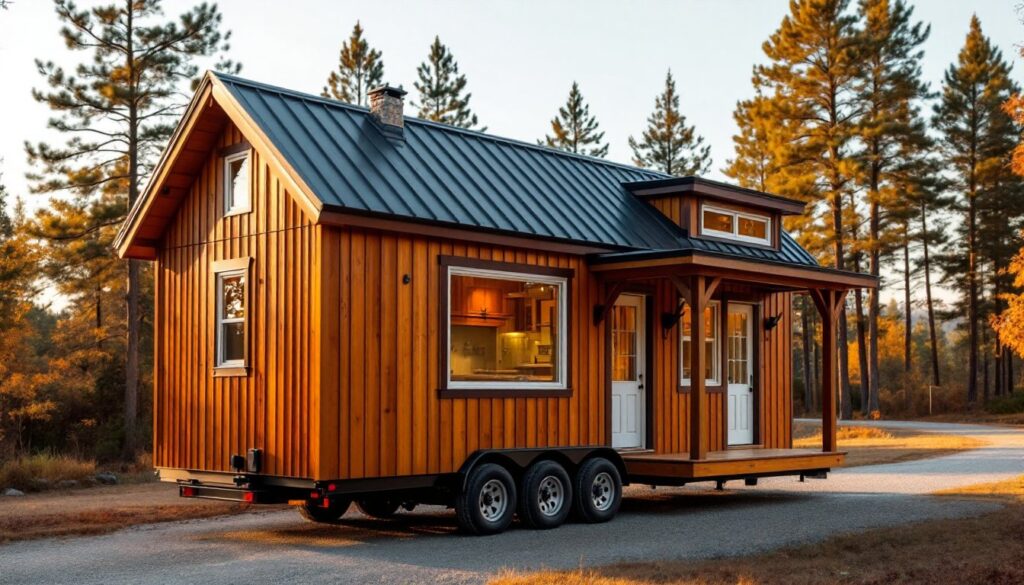
Timbercraft builds every home with structural insulated panels (SIPs) for walls and roofs, which deliver R-values between R-20 and R-40 depending on panel thickness. This outperforms standard stud-and-batt insulation found in most tiny homes and provides a continuous thermal envelope with minimal air leakage. The company also uses actual timber-frame joinery in key locations, mortise-and-tenon connections, wooden pegs, and exposed beams, not decorative trim nailed onto drywall.
Framing is kiln-dried Douglas fir or spruce, selected for strength-to-weight ratio. Trailers are triple-axle steel chassis rated for 15,000 lbs GVWR, welded and powder-coated, with tandem brakes and adjustable couplers. Timbercraft welds custom anchor points into the frame so the house bolts directly to the trailer deck, distributing road stress across the entire structure rather than relying on perimeter rim joists alone.
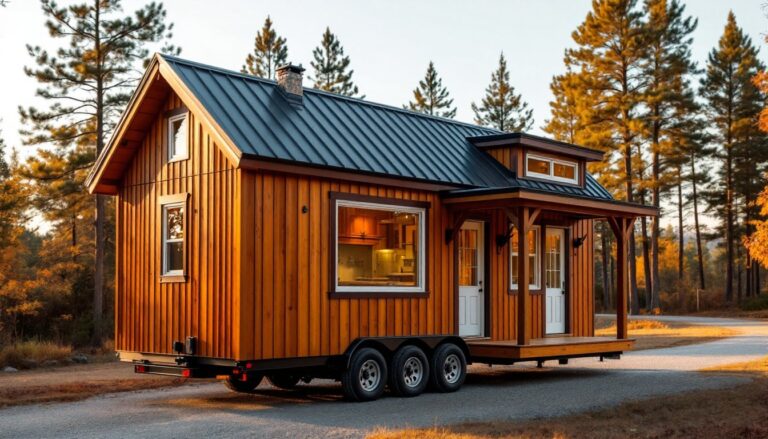
Windows are dual-pane low-E glass with argon fill, typically Andersen or Marvin units spec’d for residential construction, not RV-grade sliders. Exterior cladding options include tongue-and-groove cedar, board-and-batten pine, or metal panel siding, all installed over a rainscreen gap and Tyvek weather barrier. Roofing is standing-seam metal in most models, which sheds snow, resists wind uplift, and lasts 40+ years without maintenance.
Electrical systems meet NEC standards for residential wiring: 100-amp or 200-amp service panels, GFCI protection in wet areas, and AFCI breakers in living spaces. Plumbing uses PEX manifold distribution, which minimizes joints inside walls and simplifies winterization if the home will sit unused in freezing weather. Timbercraft doesn’t cut corners to meet a price point, they build to a spec and price accordingly.
Popular Timbercraft Models and Floor Plans
Timbercraft offers several base models, each available with layout variations and finish packages. Photos of completed builds showcase the level of detail: hand-planed wood countertops, live-edge shelving, and custom cabinetry built on-site to exact dimensions. Browsing Apartment Therapy or manufacturer galleries reveals how Timbercraft integrates natural materials and efficient tiny homes strategies into every square foot.
The Denali: Rustic Elegance Meets Modern Comfort
The Denali measures 24 feet long by 8.5 feet wide, with a main-floor bedroom instead of a sleeping loft. Interior ceiling height is 13 feet 6 inches at the peak, allowing for a storage loft above the kitchen and bath. The main bedroom fits a queen-size bed with nightstands and has a full-height closet with bifold doors.
The kitchen features a 30-inch farmhouse sink, three-burner propane range, and a 12-cubic-foot refrigerator (full-size, not apartment-grade). Upper cabinets are solid maple with soft-close hinges: lower cabinets use dovetail drawer boxes and undermount slides rated for 100 lbs. Countertops are typically butcher-block maple or quartz, sealed for water resistance.
The bathroom includes a 32-inch fiberglass shower pan, tiled walls, a composting toilet or standard flush toilet (depending on buyer preference), and a wall-hung vanity with undermount sink. Ventilation is handled by a Panasonic WhisperCeiling fan (80 CFM), ducted through the roof.
Heating and cooling options include a mini-split heat pump (9,000–12,000 BTU) or a direct-vent propane heater with wall thermostat. Both systems are sized for the home’s square footage and insulation values. Photos often show a wood-burning stove as a secondary heat source, vented through triple-wall stainless chimney pipe.
The Ridgewood: Compact Design for Full-Time Living
The Ridgewood is a 20-foot model with two sleeping lofts, designed for couples or small families. Main floor is open-plan: kitchen, dining nook, and living area flow together without interior walls. Ceiling height at the main floor is 6 feet 8 inches under the loft edge, stepping up to 10 feet in the center.
Each loft measures approximately 7 feet by 8 feet, accessible by alternating-tread staircases with handrails and 36-inch guardrails per IRC fall-protection guidelines. Loft floors are 3/4-inch tongue-and-groove plywood over engineered I-joists, which span the width without sagging and keep floor squeaks to a minimum.
Storage is integrated into stair risers, under-couch cubbies, and a full-width closet behind the bathroom. The Ridgewood’s kitchen is more compact than the Denali’s, 24-inch-wide sink base, 18-inch range, and 10-cubic-foot fridge, but still uses residential-grade appliances and solid-wood cabinetry.
Exterior features a covered porch entry with a 4-foot overhang, which keeps rain off the door and provides a mudroom transition. Many buyers add a folding deck that hinges down from the trailer frame for outdoor living space at campsites or on private land. Those considering similar top tiny homes often compare the Ridgewood’s loft layout against single-level designs.
Customization Options and Interior Features
Timbercraft builds each home to order, so buyers choose finishes, appliances, and layout tweaks during the design phase. Standard options include wood species (pine, cedar, oak, or maple), countertop material (butcher block, quartz, or concrete), and flooring (engineered hardwood, luxury vinyl plank, or cork).
Electrical upgrades include additional outlets, USB charging ports, under-cabinet LED strips, and prewiring for solar panels. A typical solar-ready package includes conduit runs from the roof to a dedicated panel space, a battery compartment in a mechanical closet, and a transfer switch for grid/off-grid operation. Buyers supply their own panels and inverters, or Timbercraft can coordinate installation with a solar contractor.
Plumbing options cover tankless propane water heaters (Rinnai or Eccotemp models, typically 6.5 GPM at 30-degree rise), RV-style water heaters (6-gallon electric/propane combo), or on-demand electric units for grid-tied setups. Greywater and blackwater systems can be configured for RV dump connections, septic tie-in, or composting toilet setups that eliminate blackwater entirely.
Cabinet interiors feature adjustable shelves, pull-out spice racks, and lazy Susans in corner bases. Drawers use full-extension slides: no flimsy euro-hinges or particle-board boxes. Hardware is typically oil-rubbed bronze or brushed nickel, matching door levers and faucet finishes. Many essential tiny homes tools are needed if buyers want to add custom built-ins or modify layouts post-delivery.
Lighting packages include dimmable LEDs throughout, with separate circuits for task lighting (kitchen, bath) and ambient lighting (living areas, lofts). Fixtures are often pendant lights over islands, recessed cans in ceilings, and sconces in bathrooms, all residential-grade, not RV plug-in strips.
Exterior add-ons include awnings (manual or electric roll-out), outdoor showers (hot/cold mixer with privacy screen), and propane quick-connects for grills or fire pits. Timbercraft can also install roof racks for kayaks or cargo boxes, reinforced with backing plates through the metal roofing into structural members. Guides like those at Fix This Build That offer project plans for DIY exterior upgrades compatible with tiny home construction.
Pricing and What to Expect When Buying
As of 2026, Timbercraft base models start around $85,000 to $95,000 for a bare-shell Ridgewood and run up to $130,000 to $150,000 for a fully finished Denali with premium upgrades. Prices vary by finishes, appliances, and custom requests, adding quartz counters, a wood stove, or solar prewiring can each add $2,000 to $5,000. These figures reflect skilled labor, quality materials, and a build timeline of 12 to 16 weeks from deposit to delivery.
Buyers should budget for delivery costs, which depend on distance from Timbercraft’s shop in Guntersville, Alabama. Transport within 500 miles typically runs $3 to $5 per mile: longer hauls or difficult access (narrow roads, tight turns, steep grades) cost more. A pilot car may be required in some states, and oversize-load permits add $200 to $500 depending on route.
Financing options include RV loans (if the home is RVIA-certified, which Timbercraft can arrange) or personal loans. RV loans offer longer terms (10–15 years) and lower rates than personal loans (5–7 years), but require the home to meet RVIA standards and be titled as a vehicle. Some buyers use home equity lines of credit or construction loans if they plan to permanently install the home on owned land. Always confirm lender requirements before signing a build contract. Those exploring how to build their own units often compare costs and timelines against Timbercraft’s turnkey pricing.
Insurance is typically through RV or mobile-home policies, not standard homeowners coverage. Expect $600 to $1,200 annually for liability and property coverage, depending on home value and location. If the home sits on a permanent foundation, some insurers will write a dwelling policy instead, which may offer broader coverage for detached structures and personal property.
Zoning and permits vary wildly by jurisdiction. Some areas classify tiny homes on wheels as RVs (allowed in RV parks, not residential zones), others as accessory dwelling units (ADUs, allowed on a primary residence lot with permits), and some prohibit them entirely. Buyers must research local codes before ordering. Timbercraft can provide stamped engineering drawings and material specs to support permit applications, but they don’t handle permitting, that’s the buyer’s responsibility. Anyone serious about tiny living should consult a tiny homes guide specific to their municipality and review tutorials at The Handyman’s Daughter for DIY prep work on land or utility hookups.
Deposits are typically 20% to 30% upfront, with progress payments at framing, rough-in, and final stages. Timbercraft provides photo updates and encourages site visits during the build. Final payment and title transfer happen at delivery. Buyers should inspect the home thoroughly before the transport crew leaves, checking for loose trim, plumbing leaks, or electrical issues is easier on-site than after the truck is gone. Reviewing best tiny homes comparisons can help set realistic expectations for quality and pricing across the industry.
Conclusion
Timbercraft Tiny Homes delivers a level of craftsmanship and structural integrity that separates them from budget builders and DIY kits. Their use of SIPs, timber-frame joinery, and residential-grade systems results in a home that handles temperature swings, road travel, and daily wear without the squeaks and failures common in lighter builds. Buyers pay a premium, but they get a structure built to last decades, not just a few seasons.