Table of Contents
ToggleTwo-bedroom tiny house plans solve one of the biggest objections to downsizing: where to put guests, kids, or a home office. Unlike single-room studios, a two-bedroom layout provides privacy and flexibility without ballooning the square footage beyond the “tiny” threshold. These plans typically range from 400 to 800 square feet, compact enough to qualify as a tiny house, yet roomy enough for small families, remote workers, or retirees who want a spare room. With smart design, a 2-bedroom tiny house can feel surprisingly open while keeping building costs, utilities, and maintenance manageable.
Key Takeaways
- Two-bedroom tiny house plans (400–800 sq ft) solve the biggest downsizing objection by providing privacy and flexibility without the cost of a full-size home, making them ideal for small families, remote workers, and retirees.
- A 2-bedroom tiny house typically costs $45,000–$90,000 to build, significantly less than a $200,000+ conventional starter home, while reducing property taxes, utilities, and maintenance expenses.
- Space-saving designs like loft bedrooms, open-concept layouts, pocket doors, and multi-functional furniture (Murphy beds, drop-leaf tables, wall-mounted desks) maximize functionality in compact footprints.
- Check local zoning and building codes before starting—many jurisdictions allow tiny houses on agricultural land or as accessory dwelling units (ADUs), but permits are required for electrical and plumbing work.
- Proper insulation, mini-split HVAC systems, and thoughtful foundation choices (concrete slab, pier-and-beam, or trailer) are critical to comfort and code compliance in small spaces.
Why Choose a 2-Bedroom Tiny House Plan?
A single-bedroom tiny house works for solo dwellers or couples, but adding a second bedroom opens up practical uses without requiring a full-size home. The extra room can function as a nursery, guest room, home office, or storage space, essential for people who work remotely or host family.
Two-bedroom plans also hold resale value better than one-bedroom models. Buyers shopping for tiny houses often want flexibility, and an extra bedroom appeals to a wider market. For families transitioning from traditional homes, the second bedroom eases the psychological shift to smaller living.
Cost efficiency remains a major draw. A 600-square-foot, 2-bedroom tiny house typically costs $45,000 to $90,000 to build (depending on finishes and whether it’s DIY or contractor-built), compared to $200,000+ for a conventional starter home in most U.S. markets. Lower square footage means reduced property taxes, utility bills, and maintenance hours.
Zoning and land use also factor in. Many jurisdictions classify structures under 800 square feet differently than full-size homes, sometimes allowing placement on agricultural land, in backyards as ADUs (accessory dwelling units), or in tiny house communities. Check local building codes, some areas require a minimum square footage or specific foundation types, and permits are almost always required for anything with plumbing and electrical.
Key Design Features of 2-Bedroom Tiny House Plans
Space-Saving Layout Strategies
Efficient 2-bedroom tiny house plans rely on tight spatial planning. Open-concept living areas combine kitchen, dining, and living spaces into one zone, eliminating hallways and wasted square footage. Walls only appear where privacy matters, around bedrooms and bathrooms.
Loft bedrooms are a hallmark of many tiny house designs. Placing one or both bedrooms in a loft above the main living area frees up the footprint for a kitchen or bathroom below. Loft access typically uses a ladder, ship’s ladder, or alternating-tread staircase. If building a loft, check headroom: the International Residential Code (IRC) requires at least 6 feet 8 inches of clearance in habitable spaces, though some jurisdictions allow reduced clearance in lofts.
Split-bedroom layouts separate the two bedrooms on opposite ends of the floor plan, maximizing privacy for multi-generational living or work-from-home setups. This approach works best in single-story plans or in designs where one bedroom sits on the main level and the other in a loft.
Pocket doors and barn doors save swing clearance. A standard hinged door needs about 9 square feet of clearance: a pocket door slides into the wall cavity, reclaiming that space. Barn doors slide along the wall face and add visual interest, though they don’t seal sound as effectively.
Multi-Functional Rooms and Furniture
Every square foot must earn its keep. Murphy beds fold into wall cabinets during the day, converting a bedroom into an office or yoga space. Sofa beds and futons serve double duty in guest rooms or living areas. Built-in storage under stairs, benches, and beds keeps clutter hidden and surfaces clear.
Dining tables with drop leaves or fold-down designs expand for meals and collapse when not in use. Kitchen islands on casters can roll out for prep work and tuck away to open up floor space. Wall-mounted desks hinge down from the wall when needed, then fold flat.
Vertical storage is critical. Floor-to-ceiling shelving, pegboards, and hanging racks use wall space that would otherwise go to waste. In kitchens, magnetic knife strips, hanging pot racks, and under-cabinet hooks keep tools accessible without eating up counter or drawer space.
Built-ins outperform freestanding furniture in tight quarters. A custom bench with lift-top storage, a window seat with drawers below, or a platform bed with integrated closets eliminates gaps and awkward spaces that freestanding pieces create. If hiring a carpenter isn’t in the budget, many woodworking tutorials walk through building simple built-ins with basic tools like a circular saw, drill, and pocket-hole jig.
Popular 2-Bedroom Tiny House Floor Plan Styles
Single-story ranch-style plans spread both bedrooms along one level, ideal for aging-in-place or anyone avoiding stairs. These layouts typically run 600 to 800 square feet on a rectangular footprint. Expect a central living/kitchen area flanked by bedrooms at each end. Single-story plans require more land but simplify framing and avoid the structural considerations of supporting a loft.
Loft-over-main designs place one bedroom in a loft and the other on the main floor. This arrangement suits families with young kids (loft for children, main-floor primary for parents) or couples who want a main-floor guest room. Total square footage often stays under 500 square feet by stacking spaces vertically. Loft construction requires engineered lumber or steel beams rated for the live load, typically 40 pounds per square foot for residential sleeping areas per IRC.
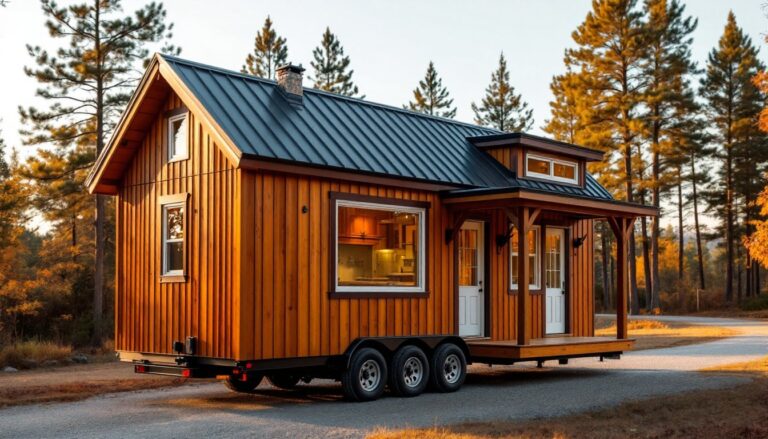
A-frame and cabin-style plans use steeply pitched roofs to create loft space without adding a second story. The triangular profile sheds snow and rain efficiently, making these plans popular in mountain and rural settings. Both bedrooms usually sit in lofts on opposite gable ends, with living space below. Timber framing and exposed rafters add character but require careful attention to insulation and moisture barriers to prevent condensation.
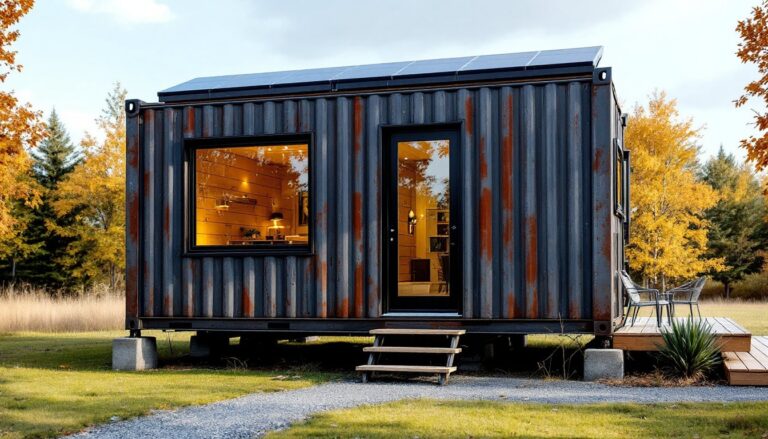
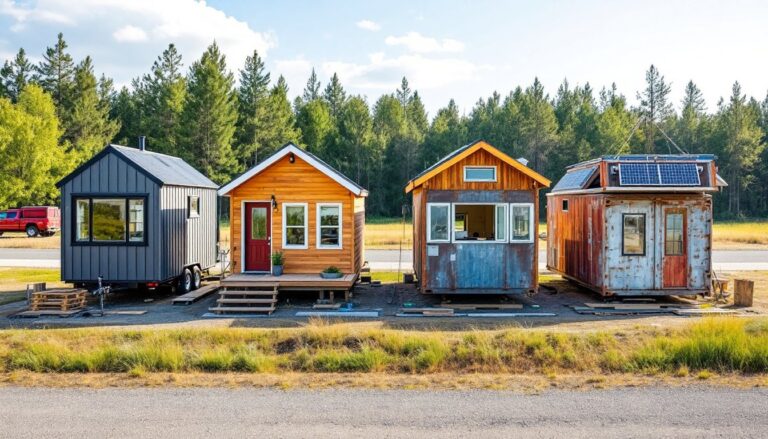
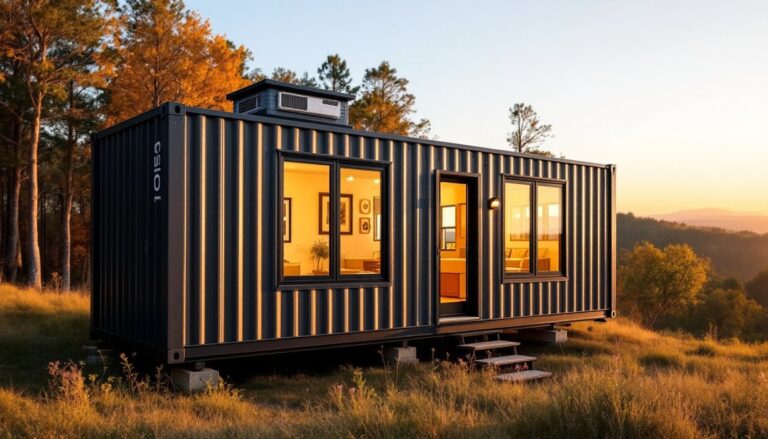
Shipping container conversions repurpose one or two 40-foot containers (each 320 square feet inside) into 2-bedroom layouts. Containers provide a pre-fab structure but need insulation, interior framing, and window cutouts. Cutting structural steel requires an angle grinder or plasma cutter and often a structural engineer’s stamp to ensure load-bearing integrity. Many builders experimenting with containers appreciate the industrial aesthetic and rapid shell assembly.
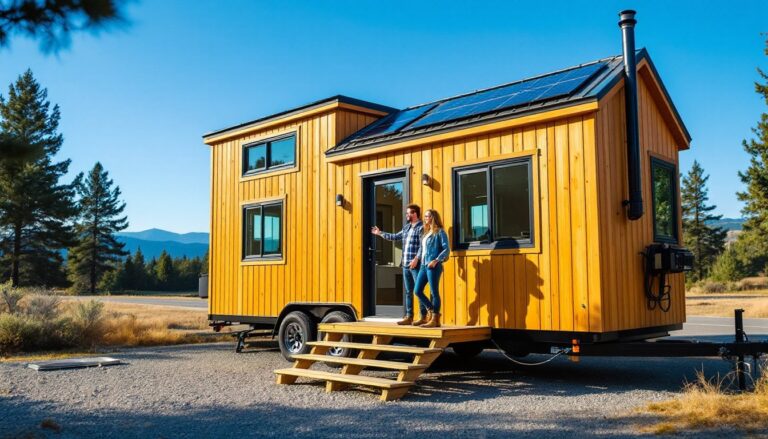
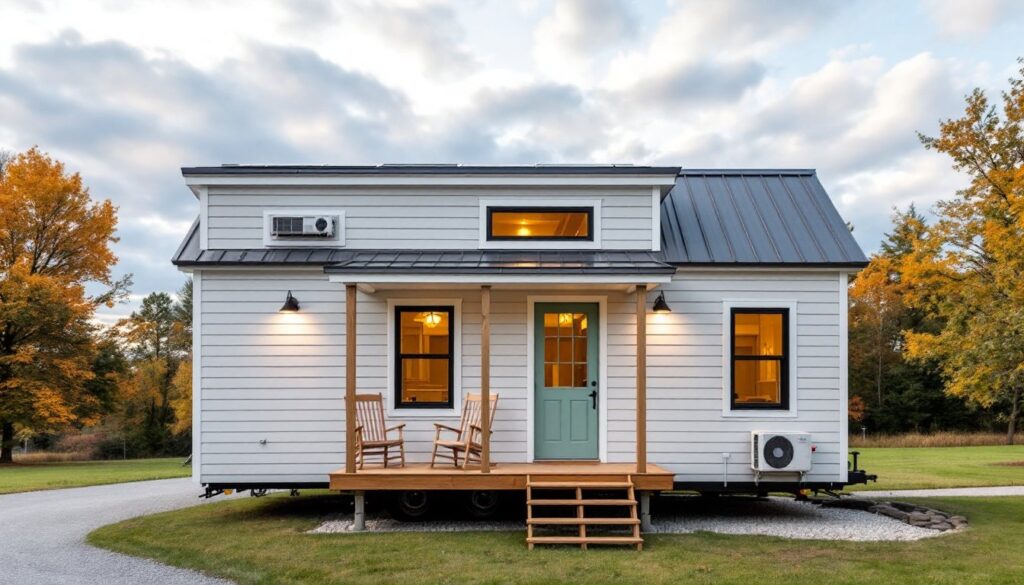
Tiny house on wheels (THOW) plans mount the structure on a heavy-duty trailer, allowing mobility and sometimes skirting traditional building codes. Road-legal THOWs max out around 8.5 feet wide and 13.5 feet tall to avoid oversize permits. Two bedrooms typically means one loft over the living area and one over the kitchen or bathroom. Trailer-based builds require attention to weight distribution, tie-down anchoring, and road-worthy construction, everything must handle vibration and movement.
Practical Considerations Before Building Your 2-Bedroom Tiny House
Zoning and permits come first. Most municipalities require building permits for any structure with electrical, plumbing, or a permanent foundation. ADU (accessory dwelling unit) ordinances in many cities now allow tiny houses in backyards, but setback requirements, maximum square footage, and owner-occupancy rules vary widely. Contact your local planning department before purchasing plans or materials. If the plan doesn’t meet code, you’ll need an architect or engineer to modify it.
Foundation type affects cost, permanence, and code compliance. Concrete slab foundations suit warm climates and permanent placements, costing roughly $4 to $8 per square foot for materials and DIY labor. Pier-and-beam foundations elevate the structure, allowing airflow and easier utility access: they’re common in flood-prone areas. Skid foundations (parallel treated timbers) let you move the house with a flatbed truck. Trailer chassis provide mobility but limit design and require registration and insurance in some states.
Utilities and off-grid options shape both budget and lifestyle. Grid-tied builds connect to municipal water, sewer, and electric: expect $3,000 to $10,000 in hookup fees depending on distance and utility provider. Off-grid setups use well water or rainwater catchment, septic or composting toilets, and solar panels with battery storage. A basic 3kW solar array with lithium batteries runs around $10,000 to $15,000 installed, doable for handy owners, but electrical work beyond the panels typically requires a licensed electrician to meet National Electrical Code (NEC) standards.
Insulation and climate control are non-negotiable in a space this small. Poor insulation turns a tiny house into an oven in summer and an icebox in winter. Use spray foam (R-6 to R-7 per inch) in walls and under the roof deck for the best thermal performance and air sealing, or rigid foam board (R-5 per inch) if spray foam is out of budget. Mineral wool batts (R-15 in a 2×4 wall) offer fire resistance and sound dampening. Mini-split heat pumps provide both heating and cooling in a compact, wall-mounted unit: a 12,000 BTU mini-split handles most tiny houses under 600 square feet.
Budgeting and cost control require honest math. DIY builds using reclaimed materials and sweat equity can come in under $30,000, but expect $60,000 to $100,000 for a turnkey build with hired contractors. Track costs per category: foundation, framing lumber, windows and doors, roofing, siding, insulation, drywall, flooring, kitchen and bath fixtures, electrical, plumbing, and HVAC. Lumber prices fluctuate, check current rates before finalizing budgets. Many small-space building techniques emphasize material efficiency to control costs without sacrificing quality.
Safety and structural integrity matter even more in a tiny house. Lofts need guardrails at least 36 inches tall if the drop is more than 30 inches. Staircases require handrails and specific tread/riser dimensions per IRC. Smoke and carbon monoxide detectors are mandatory. If the house is on a trailer, use hurricane straps or steel cables to anchor the structure to the frame, road travel and wind loads are real.
For those starting from scratch, reviewing proven small-space strategies and studying real tiny house examples can clarify what works and what doesn’t before cutting the first board.
Conclusion
Two-bedroom tiny house plans offer a realistic path to affordable, flexible living without giving up privacy or function. Whether built on a foundation or trailer, these designs prove that smart layout and multi-functional features can pack a lot of life into 400 to 800 square feet. Just remember: permits, insulation, and structural details matter as much as the floor plan itself.