Table of Contents
ToggleOregon has become a hotspot for tiny house living, offering a combination of progressive zoning laws, natural beauty, and a culture that values sustainability. For those looking to downsize, cut housing costs, or embrace a simpler lifestyle, tiny house communities provide shared infrastructure, social connection, and legal pathways that individual tiny homeowners often struggle to find. Whether someone’s drawn to the Portland metro area, the Oregon coast, or the quieter southern regions, understanding the landscape of communities, regulations, and costs is essential before making the leap.
Key Takeaways
- Oregon’s progressive zoning laws and culture of sustainability make tiny house communities an accessible option for those seeking to downsize and reduce housing costs.
- Tiny house communities in Oregon range from Portland’s Simply Home—a permanent village blending affordable housing with social support—to coastal rentals and southern Oregon cooperative ownership models.
- Foundation-based tiny homes (120–400 sq ft) must comply with IRC Appendix Q standards, while tiny homes on wheels (THOWs) face stricter placement restrictions and are typically classified as RVs requiring special permits.
- Total upfront costs for tiny house community living range from $25,000–$150,000 for the home itself, plus $400–$700 monthly lot rent or $10,000–$40,000 community buy-ins, with ongoing utility and maintenance expenses.
- Oregon’s mild climate and wet winters require weather-appropriate materials like fiber-cement siding, quality flashing, and insulation rated R-21 (walls) and R-38 (ceiling) to ensure durability and energy efficiency.
- Financing tiny homes is more complex than traditional mortgages; THOWs typically require RV loans (7–12% interest) while foundation-based homes may qualify for standard mortgages, with local credit unions offering specialized tiny home financing options.
What Is a Tiny House Community and Why Oregon?
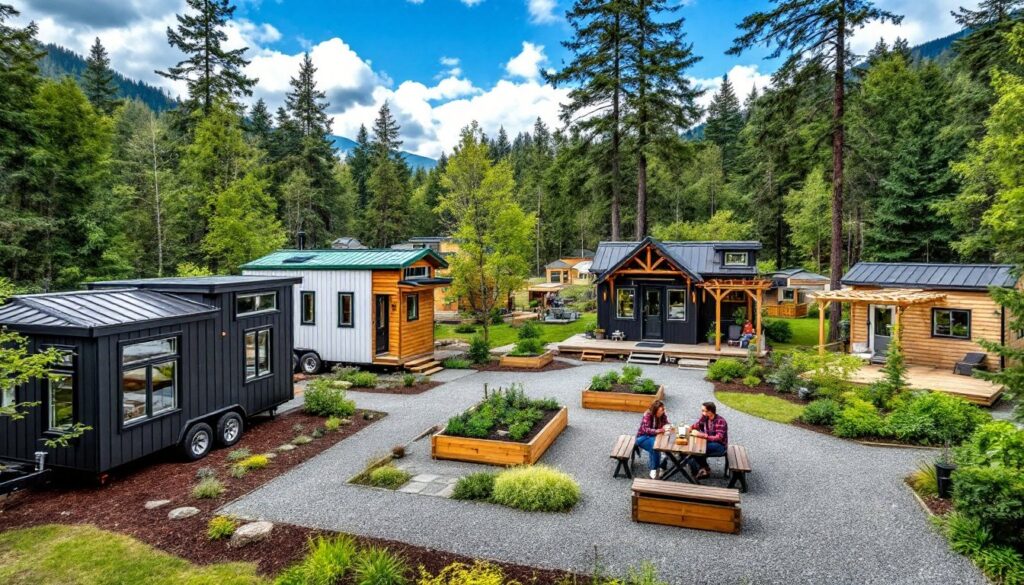
A tiny house community is a residential development where multiple tiny homes share land, utilities, and often common amenities like gardens, workshops, or gathering spaces. Unlike RV parks or traditional subdivisions, these communities are purpose-built for permanent or semi-permanent tiny living, with infrastructure designed for structures typically under 400 square feet.
Oregon stands out for several reasons. The state passed legislation in recent years that makes it easier for cities to adopt tiny house-friendly zoning, especially for Accessory Dwelling Units (ADUs) and cluster developments. Counties like Multnomah, Lane, and Clackamas have explored pilot programs allowing tiny homes on wheels (THOWs) in certain zones, provided they meet safety and hookup standards.
The culture here supports alternative housing. Oregon’s emphasis on environmental stewardship, affordable housing solutions, and local food systems aligns naturally with the tiny house movement. Builders and residents find a receptive audience among municipal planners willing to experiment with code revisions, especially in college towns and metro areas facing housing shortages.
Climate also plays a role. Mild, wet winters and dry summers make Oregon manageable for tiny homes with proper insulation and moisture control. Unlike arid states where water access is scarce or snow-heavy regions requiring extreme weatherproofing, Oregon offers a middle ground that doesn’t demand extreme HVAC systems or off-grid capabilities, though many residents still choose solar and composting toilets for sustainability.
Top Tiny House Communities in Oregon
Portland Metro Area Communities
Caravan Tiny House Hotel in Portland doubles as a community showcase and short-term rental site. While not a permanent residential community, it’s a proving ground for builders and a way to test tiny living before committing. The site features several models, shared outdoor space, and hookups for water, sewer, and electrical.
Simply Home Community in Northeast Portland is one of the state’s longest-running permanent tiny house villages. Originally developed as transitional housing for formerly homeless individuals, it’s grown into a stable, supportive neighborhood with tiny homes on foundations. Residents share laundry facilities, a community garden, and case management services. The model blends affordable housing policy with tiny home construction, showing how small-space living strategies can address social challenges.
ADU-focused developments in suburbs like Beaverton and Tigard allow tiny homes as backyard units on existing single-family lots. While not traditional communities, these arrangements create micro-neighborhoods where property owners rent tiny homes to tenants or house family members. Local codes require adherence to International Residential Code (IRC) Appendix Q, which sets minimum standards for habitable spaces, egress windows, and ceiling heights.
Coastal and Southern Oregon Options
On the coast, Tiny Tranquility near Yachats offers ocean-view tiny home sites on a hillside property. Residents lease plots with shared septic, water from a community well, and access to hiking trails. The development markets to retirees and remote workers, with several inspiring examples of tiny homes optimized for coastal weather, including standing-seam metal roofs and fiber-cement siding to resist salt air.
Emerald Village Eugene is a transitional housing community similar to Simply Home, but with a focus on wraparound services and pathways to permanent housing. It’s a nonprofit model, not open-market, but demonstrates how cities can integrate tiny homes into broader housing strategies. Eugene’s zoning allows tiny homes in certain districts as long as they’re on permanent foundations or meet manufactured dwelling standards.
Southern Oregon, especially around Ashland and Medford, has seen growth in private tiny home parks. These tend to be smaller, 5 to 15 units, often on agricultural or rural residential land where minimum lot sizes allow creative subdivisions. Some are cooperative ownership models, where residents collectively own the land and share maintenance duties.
Legal Considerations and Zoning Laws for Tiny Houses in Oregon
Oregon’s approach to tiny house regulation is a patchwork. State law enables local flexibility, but each municipality writes its own rules. Understanding the distinction between tiny homes on wheels (THOWs) and foundation-based tiny homes is critical.
Tiny homes on wheels are often classified as RVs or park model trailers. To be parked legally, they generally need to be in an RV park, on private property with a conditional use permit, or in a specially zoned tiny house community. THOWs must meet ANSI A119.5 (Park Model RV standard) or RVIA certification for road safety and construction quality. Even certified models face restrictions: many cities prohibit long-term occupancy in RVs outside designated parks.
Foundation-based tiny homes are treated like traditional dwellings if they comply with IRC Appendix Q, which covers structures between 120 and 400 square feet. Appendix Q sets requirements for loft access (headroom, stair width), emergency egress, and insulation. Cities that adopt Appendix Q allow tiny homes as primary residences or ADUs on standard residential lots, as discussed on Fine Homebuilding, where advanced framing and energy-efficient building techniques are regularly featured.
Permits are required for foundation-based builds, just like conventional homes. Expect electrical, plumbing, and framing inspections. If the structure is off-grid, check local codes for composting toilets and graywater systems, some jurisdictions allow them, others require conventional septic or sewer hookups.
Zoning varies widely. Portland allows ADUs citywide and has streamlined permitting. Eugene piloted a program allowing THOWs on certain lots with land-use approvals. Bend and Corvallis have similar experimental programs. Rural counties may have more lenient rules but fewer services, no public water or sewer often means drilling a well and installing a septic system, which adds cost and complexity. Always check with the local planning and building department before purchasing land or a tiny home.
Building or Buying Your Tiny Home for Oregon Communities
Prospective residents face a choice: buy a pre-built tiny home, hire a custom builder, or DIY. Each path has tradeoffs in cost, timeline, and compliance.
Pre-built models from manufacturers like Tumbleweed, Escape, and Pacific Tiny Homes range from $50,000 to $120,000, depending on size, finishes, and whether they’re delivered turnkey or as a shell. These are typically THOWs on trailers, certified to RVIA or ANSI standards, which simplifies legal placement in RV-zoned communities. Delivery to Oregon can add $3,000 to $7,000 if the builder is out of state.
Custom builds offer more design control. Oregon has several regional builders experienced in code-compliant tiny homes. Expect to pay $60,000 to $150,000 for a custom foundation-based tiny home, depending on finishes, square footage, and site prep. Custom builds take 6 to 12 months from design to occupancy. Builders familiar with essential building techniques for small spaces can maximize storage, natural light, and structural efficiency.
DIY construction is feasible for those with carpentry skills, but Oregon’s permit requirements mean all work must pass inspection. Start with a detailed plan that meets IRC Appendix Q or ANSI standards. Budget for materials ($25,000 to $50,000 for a basic build), tools, and permit fees ($1,000 to $3,000). Common pitfalls include underestimating weight for THOWs, trailers must be rated for the finished load, and axle/tire specs matter. Use actual lumber dimensions (a 2×4 is really 1.5″ × 3.5″) and plan framing to minimize waste from standard sheet goods (4×8-foot plywood and drywall).
Weather-appropriate materials are essential. Oregon’s rain demands Tyvek or similar weather-resistant barriers, quality flashing around windows, and durable siding. Fiber-cement, cedar, or metal siding outlast vinyl in wet climates. Insulation should meet or exceed Oregon’s climate zone requirements, typically R-21 walls, R-38 ceiling, R-13 floor for western Oregon. Spray foam is popular in tiny builds for its air-sealing and high R-value per inch, but mineral wool batts are cheaper and DIY-friendly.
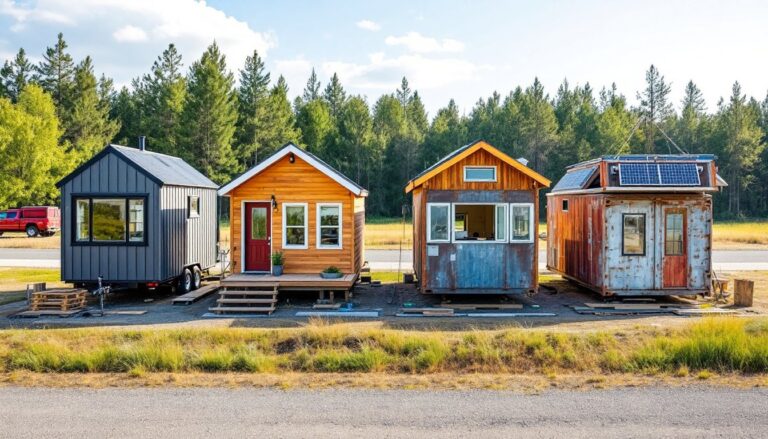
For those considering various creative tiny home designs, Oregon’s communities welcome everything from modern minimalist boxes to rustic cabin styles, as long as they meet safety and structural codes.
Costs and Budgeting for Tiny House Community Living
Total costs break into three categories: the home itself, site/community fees, and ongoing expenses.
Home acquisition is the biggest upfront cost. A quality THOW runs $50,000 to $100,000: a foundation-based tiny home, $60,000 to $150,000. DIY builders can cut that to $25,000 to $60,000 if they supply labor, but permit fees, inspections, and tool rentals still add up.
Site costs vary by community type. In a rental community like Tiny Tranquility, monthly lot rent runs $400 to $700, covering water, sewer, trash, and common area maintenance. Privately owned lots in cooperative communities may require a buy-in of $10,000 to $40,000, plus monthly HOA fees. ADU placements on a family member’s lot might be free or involve informal rent.
Utility hookups for foundation-based builds can add $5,000 to $15,000 if extending water, sewer, and electrical from the street or main house. Off-grid systems, solar panels, battery banks, composting toilets, rainwater catchment, cost $10,000 to $25,000 depending on capacity and installation complexity. Oregon’s wet winters mean solar production drops significantly from November through February, so grid-tied systems with net metering are often more practical than full off-grid setups.
Ongoing costs include utilities ($50 to $150/month if on-grid), insurance ($600 to $1,200/year for THOWs, often requiring specialized RV or tiny home policies), property taxes (if owned land), and maintenance. Tiny homes have less square footage to maintain, but systems like composting toilets, wood stoves, and solar inverters require attention. When exploring the difference between tiny homes and traditional houses, ongoing maintenance costs are often more comparable than expected, smaller space doesn’t always mean proportionally smaller upkeep.
Budget for hidden expenses: moving a THOW requires a heavy-duty truck and trailer experience or hiring a transport service ($3 to $5 per mile). Foundation pours for permanent tiny homes run $3,000 to $8,000 depending on site conditions and frost depth requirements. Add 10–15% contingency to any budget for surprises, permitting delays, material price swings, or site prep complications are common, as noted on Curbed, which regularly covers real estate and housing market realities.
Financing is trickier than conventional mortgages. THOWs are often financed as RVs or personal property loans with higher interest rates (7–12%) and shorter terms (5 to 15 years). Foundation-based tiny homes may qualify for traditional mortgages if they meet minimum square footage (some lenders require 600+ square feet), but many buyers pay cash or use personal loans. Oregon credit unions like Advantis and Unitus have offered tiny home financing in the past, check local lenders familiar with alternative housing.
For those evaluating whether to join a tiny house community, reviewing the latest tiny home trends in 2026 can provide insight into market shifts, financing options, and design innovations that affect long-term value and livability, as explored on Apartment Therapy, where small-space living ideas and budget-friendly solutions are a regular focus.
Safety note: Always wear appropriate PPE, gloves, safety glasses, and a dust mask, when cutting lumber, installing insulation, or handling treated wood. Tiny home builds involve the same hazards as conventional framing: power tools, ladders, and heavy materials.