Table of Contents
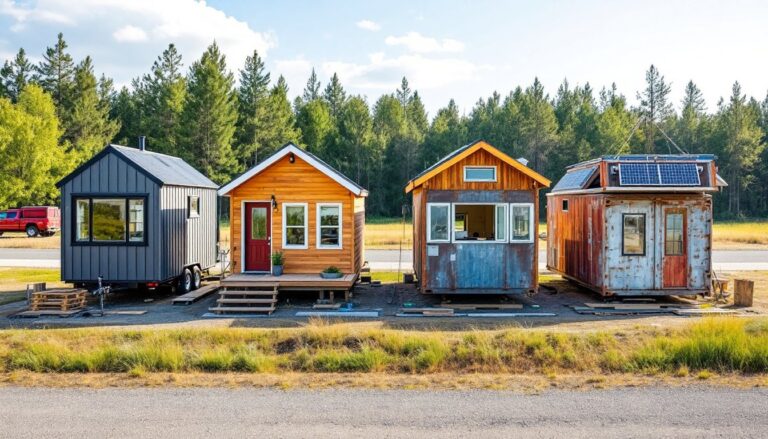
ToggleFiguring out how much a tiny house costs isn’t as simple as checking a price tag. The answer ranges from under $10,000 for a bare-bones DIY build to $150,000 or more for a luxury model on wheels. Tiny home prices depend on whether someone’s swinging a hammer themselves, ordering a prefab shell, or hiring a custom builder. Material quality, square footage, foundation type, and location all shift the numbers. This guide breaks down real-world tiny house costs, uncovers hidden expenses most first-timers miss, and offers practical strategies to keep a downsized living project on budget without cutting corners that matter.
Key Takeaways
- Tiny home cost ranges from under $10,000 for DIY builds to $150,000+ for luxury models, with pricing driven by build method, materials, foundation type, and location.
- DIY tiny home builds cost $15,000–$40,000 when owners handle labor themselves, while prefab kits run $30,000–$80,000 and custom builds start at $70,000 with professional construction.
- Hidden expenses like land acquisition ($5,000–$50,000+), permits ($500–$3,000), utility hookups ($1,000–$10,000+), and annual insurance ($600–$1,500) significantly increase total tiny home cost beyond the base build.
- Hybrid cost-saving strategies—doing DIY framing and finishes while hiring licensed pros for electrical and plumbing—can reduce total expenses by 30–50% without compromising code compliance or safety.
- Off-grid tiny homes require substantial upfront investment ($15,000+) for solar, batteries, and water systems, while grid-tied homes have lower equipment costs but ongoing utility expenses averaging $30–$100 monthly.
- Regional factors including labor rates ($50–$125 per hour), permitting requirements, and building code enforcement significantly impact final tiny home cost, making local benchmarks essential for accurate budgeting.
What Impacts the Cost of a Tiny Home?
The cost of a tiny house hinges on several factors that can push a budget from thrifty to sky-high. Square footage is the obvious starting point, a 120-square-foot dwelling costs less than a 400-square-foot model, but the per-square-foot price often climbs as size shrinks because fixed costs (appliances, windows, doors) don’t scale down proportionally.
Foundation type plays a major role. A tiny home on wheels requires a custom trailer rated for the load, typically adding $4,000 to $8,000 upfront. Permanent foundations, pier-and-beam, slab, or crawlspace, range from $3,000 to $10,000 depending on soil conditions and frost depth. Wheels offer mobility but complicate zoning: permanent foundations mean simpler permitting in most jurisdictions.
Build method drives labor and timeline. Owner-builders who handle framing, insulation, and finish work themselves can cut costs by 40–60% compared to hiring a general contractor. Prefab kits split the difference, manufacturers deliver wall panels, trusses, and sometimes plumbing rough-ins, leaving final assembly to the buyer. Custom builds by professional tiny home builders deliver turnkey convenience but command premium pricing.
Materials and finishes separate budget builds from high-end models. Reclaimed barn wood, copper fixtures, and quartz counters look great but add thousands. Standard materials, nominal 2×4 studs (actual 1.5″ × 3.5″), OSB sheathing, vinyl siding, laminate counters, keep costs predictable. Upgrading insulation from fiberglass batts to closed-cell spray foam adds $1,500 to $3,000 but cuts heating bills long-term.
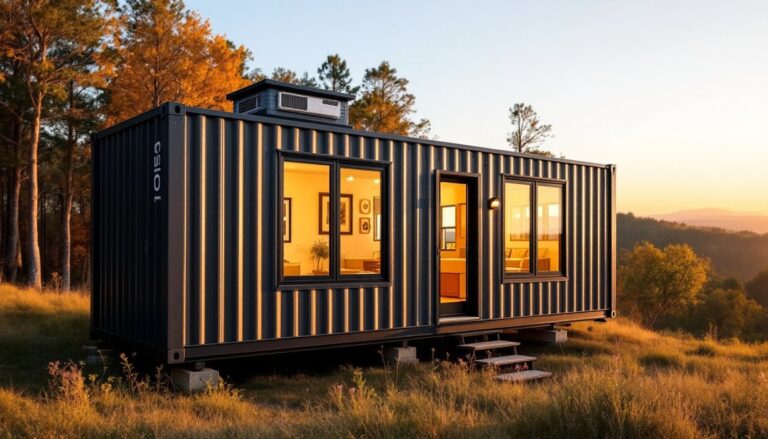
Utilities and systems vary widely. A grid-tied tiny home with standard 200-amp service, municipal water, and septic hookup costs less to equip than an off-grid setup requiring solar panels ($8,000–$15,000), a composting toilet ($1,000–$2,500), and a rainwater collection system ($2,000–$5,000). Appliances matter too, a full-size refrigerator and range eat space and budget, while compact RV-style units save both.
Location and labor rates affect material delivery, permitting fees, and contractor availability. Rural builds may dodge pricey permits but face higher shipping costs for specialty items. Urban projects deal with stricter code enforcement and higher electrician and plumber rates, expect $75 to $125 per hour in metro areas versus $50 to $85 in smaller markets.
Average Tiny Home Costs: From DIY Builds to Luxury Models
Tiny house prices span a massive range depending on build approach and finish level. Here’s what to expect in 2026.
DIY Tiny Home Builds
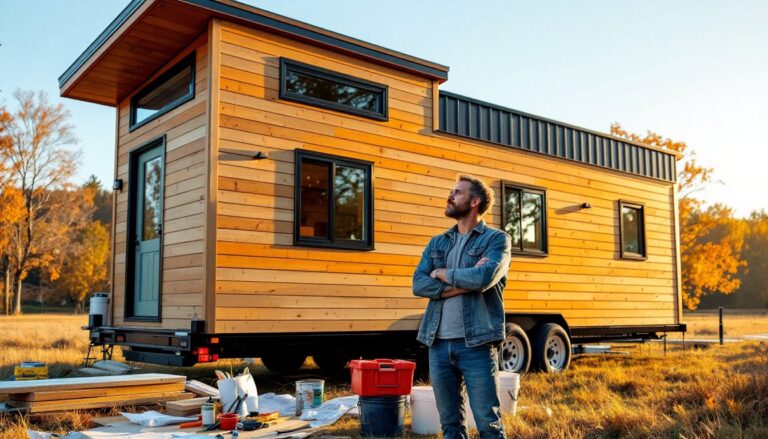
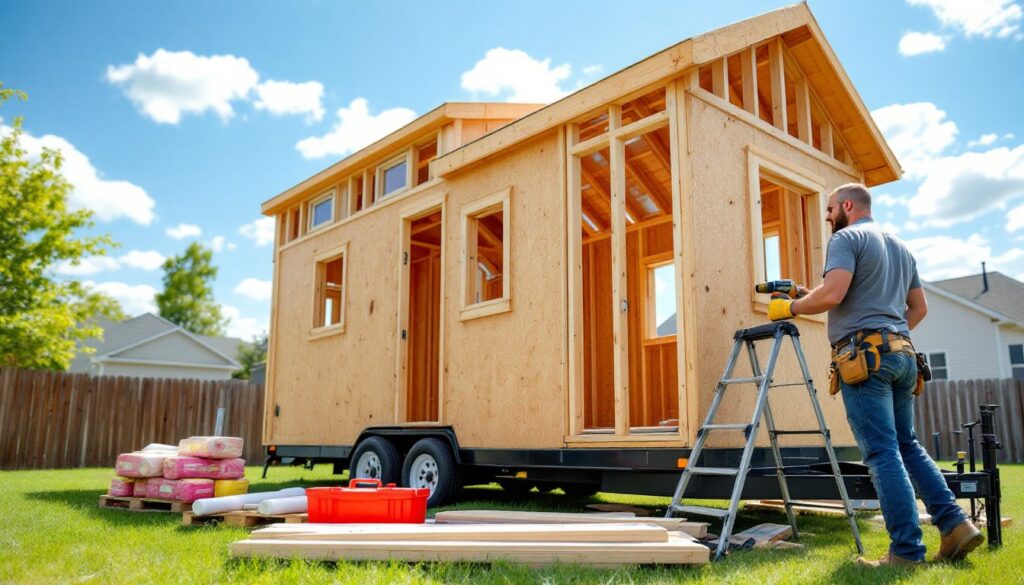
Owner-builders who source materials, pull permits, and do the labor themselves can complete a basic tiny home for $15,000 to $40,000. That assumes a 150- to 250-square-foot footprint, a trailer or simple foundation, standard framing lumber, and modest finishes. Material costs break down roughly as follows:
- Trailer or foundation: $3,000–$8,000
- Framing lumber and sheathing: $2,500–$5,000
- Roofing (metal or asphalt shingles): $800–$2,000
- Windows and exterior door: $1,200–$3,000
- Insulation (fiberglass batts or rigid foam): $500–$1,500
- Electrical rough-in and panel: $1,000–$2,500
- Plumbing (PEX tubing, fixtures, water heater): $1,500–$3,000
- Interior finishes (drywall, flooring, cabinetry): $3,000–$8,000
- Appliances (mini-fridge, two-burner cooktop, combo washer-dryer): $1,500–$4,000
DIY builds demand time and skill. Expect 800 to 1,200 hours of labor spread over six months to a year. If someone lacks framing or electrical experience, bringing in a pro for critical phases, like wiring to meet NEC (National Electrical Code) standards or installing a propane system, adds $2,000 to $5,000 but prevents costly mistakes. Always check local building codes: many jurisdictions require licensed electricians and plumbers for final inspections, even on owner-built projects.
Prefab and Shell Kits
Prefab tiny home kits and shell packages land in the $30,000 to $80,000 range before site prep and finish work. These kits typically include engineered wall panels, roof trusses, windows, doors, and sometimes a subfloor mounted on a trailer. Buyers handle insulation, electrical, plumbing, and interior finishes, or hire subs to complete those phases.
Shell kits save time on framing and reduce waste since panels arrive cut to spec. Installation takes two to four weeks with a helper, assuming basic carpentry skills. Adding electrical, plumbing, and finishes pushes total costs to $50,000 to $100,000 depending on material choices. Prefab manufacturers often provide engineered drawings stamped by a licensed professional, which streamlines permitting in code-compliant areas. For builders interested in mastering the fundamentals, exploring essential building methods can help avoid common pitfalls.
Custom and Luxury Tiny Homes
Turnkey tiny homes built by professional contractors or specialty tiny home companies start around $70,000 and climb past $150,000 for luxury models. Custom builds include everything, design, permits, materials, labor, appliances, and often delivery to the site. High-end finishes like hardwood flooring, tile showers, stainless appliances, and custom millwork push prices higher.
Luxury tiny homes may feature off-grid solar arrays, tankless water heaters, composting toilets, smart home systems, and premium insulation (spray foam plus exterior rigid foam). Builders charge $200 to $400 per square foot for custom work, compared to $100 to $200 per square foot for standard construction. Hiring a custom builder makes sense for buyers who lack time or skills but want a move-in-ready dwelling that meets specific needs.
Hidden Costs and Ongoing Expenses to Consider
How much does it cost to build a tiny house once all the extras are factored in? First-timers often overlook expenses that add up fast.
Land and site prep aren’t included in most tiny home cost breakdowns. Buying a lot ranges from $5,000 in rural areas to $50,000 or more near cities. If parking a tiny home on wheels on someone else’s property, expect to pay $200 to $800 per month depending on location and amenities (water, electric hookups, waste disposal). Site prep, clearing, grading, running utilities, adds $3,000 to $15,000 depending on terrain and distance from the street.
Permits and inspections vary by jurisdiction. Some counties treat tiny homes on wheels as RVs and skip building permits: others enforce the IRC (International Residential Code) and require full plan review, foundation inspections, and occupancy certificates. Budget $500 to $3,000 for permits, engineering stamps, and inspection fees. Skipping permits risks fines and difficulty selling later.
Utility hookups cost real money. Running electric service from the pole to a new dwelling averages $1,000 to $3,000 depending on distance. Water and sewer taps range from $2,000 to $10,000 in municipal areas: rural sites may need a well ($3,000–$10,000) and septic system ($5,000–$15,000). Off-grid setups trade hookup fees for upfront equipment costs, solar, batteries, water storage, that exceed $15,000 for a reliable system.
Insurance for tiny homes runs $600 to $1,500 annually. Homes on wheels often require RV or specialty tiny home insurance, which can be harder to source than standard homeowner’s policies. Permanent-foundation tiny homes qualify for traditional coverage but may face minimum dwelling size requirements, some insurers won’t cover structures under 400 square feet.
Ongoing expenses include property taxes (if land is owned), utility bills, propane refills, maintenance, and repairs. Tiny homes have less square footage to heat and cool, cutting monthly energy costs to $30 to $100 in most climates. But, smaller spaces show wear faster, floors, counters, and fixtures take concentrated use. According to data from ImproveNet, budgeting 1–2% of the home’s value annually for maintenance keeps systems running smoothly.
Financing challenges also carry hidden costs. Traditional mortgage lenders rarely finance tiny homes under 400 square feet or structures on wheels. Buyers turn to personal loans (higher interest rates, shorter terms) or RV loans, which may require 10–20% down and carry APRs of 5–10%. Paying cash avoids interest but ties up capital that could go toward land or upgrades.
How to Save Money on Your Tiny Home Project
Trimming the cost of a tiny home without sacrificing safety or livability takes planning and a willingness to do some heavy lifting, literally.
Do the labor yourself where skills allow. Framing, insulation, drywall, painting, and finish carpentry are within reach for motivated DIYers with basic tool skills. Hire licensed pros for electrical, plumbing, and HVAC rough-ins to meet code and pass inspections. A hybrid approach, owner handles demolition, framing, and finishes: subs handle mechanicals, can cut total costs by 30–50%. For those new to the process, a solid beginner’s guide offers step-by-step direction.
Source reclaimed and surplus materials. Salvage yards, Habitat for Humanity ReStores, and Craigslist offer windows, doors, cabinets, and fixtures at 40–70% off retail. Reclaimed lumber adds character and costs less per board foot than new hardwood, though it requires extra prep, pulling nails, planing, cutting around defects. Verify that salvaged materials meet current building codes: old windows may lack proper U-values for energy compliance.
Buy materials in bulk or during sales. Lumber yards and big-box stores run seasonal promotions, spring for framing lumber, fall for insulation. Ordering full bales of insulation, pallets of shingles, or bulk fasteners (screws, nails) saves 10–20%. Join a local builder’s co-op or contractor rewards program to access wholesale pricing.
Choose a simpler floor plan. Complex rooflines, dormers, and bay windows add labor and material costs. A rectangular footprint with a straightforward gable or shed roof keeps framing simple and waste low. Positioning plumbing fixtures (sink, shower, toilet) along a single wet wall reduces pipe runs and fittings, cutting plumbing costs by $500 to $1,500.
Use standard dimensions. Framing walls to accommodate 4×8 sheets of plywood and drywall without ripping saves time and material. Spacing studs at 16 inches on center (standard residential framing) ensures structural integrity and simplifies insulation and sheathing. Custom dimensions drive up waste and labor hours.
Delay high-end finishes. Move in with laminate counters, vinyl plank flooring, and basic fixtures, then upgrade later as budget allows. Prioritize insulation, weather sealing, and mechanicals, items that are expensive or impossible to retrofit. Countertops and backsplashes are easy weekend projects down the road.
Compare tiny home strategies and financing options early. Some builders finance through personal loan providers, while others tap home equity or construction loans if they already own land. Running the numbers on interest rates and repayment terms can save thousands over the life of the loan. Weighing different living options also helps clarify whether a tiny home fits long-term goals or if a modest traditional build makes more financial sense.
Plan for seasonal work. Framing, roofing, and exterior finishes go faster in dry weather. Scheduling the build to avoid winter delays (frozen ground, short daylight, material shrinkage) cuts labor hours and keeps the project moving. Interior work, electrical, plumbing, insulation, drywall, can happen year-round once the shell is weathertight.
Rent or borrow specialty tools. A miter saw, table saw, framing nailer, and circular saw are must-haves, but items like a paint sprayer, floor nailer, or scaffolding can be rented for $30 to $100 per day. Sharing tools with other DIYers or joining a tool library spreads costs and builds community connections.
Anyone comparing tiny house cost options should also monitor emerging trends that influence material availability and pricing. Supply chain shifts, code updates, and manufacturer innovations all affect what’s available and what it costs. Keeping an eye on top models in the market provides benchmarks for features and pricing, while gathering the right tools early prevents mid-project slowdowns and cost overruns. Those serious about controlling expenses often benefit from reading a comprehensive planning guide before breaking ground.
Cost estimates found on platforms like HomeAdvisor can provide regional benchmarks, but always adjust for local material and labor rates. Tiny home prices fluctuate with lumber markets, fuel costs, and regional demand, what’s accurate today may shift in six months.