Table of Contents
ToggleThe tiny home movement has shifted from fringe experiment to mainstream housing solution. What started as a response to the 2008 financial crisis has evolved into a lifestyle choice for minimalists, retirees, remote workers, and anyone tired of oversized mortgages. But “tiny home” isn’t a one-size-fits-all category. The options range from code-compliant foundation builds to off-grid container conversions, each with distinct construction methods, zoning hurdles, and livability trade-offs. Before committing to a downsized footprint, it’s critical to understand which type fits your budget, skill level, and local regulations.
Key Takeaways
- Types of tiny homes fall into five main categories—foundation-based builds, tiny houses on wheels (THOWs), container homes, prefab/modular units, and alternative structures—each with distinct zoning, financing, and cost implications.
- Tiny houses on wheels offer mobility and lower upfront costs ($30,000–$150,000) but face zoning restrictions, limited financing options, and towing requirements that permanent foundation builds avoid.
- Foundation-based tiny homes qualify for conventional mortgages and real estate appreciation but require full IRC compliance, higher upfront costs ($100–$200/sq ft), and are permanent once built.
- Container homes provide durability and modular appeal but require expensive insulation ($1.50–$3/sq ft), structural reinforcement, and engineered drawings—often matching or exceeding stick-built costs per square foot.
- Before choosing a tiny home type, verify local zoning codes, assess your DIY capability versus turnkey preferences, and prioritize whether long-term permanence or mobility fits your lifestyle and financial goals.
- Code compliance and professional engineering for structural modifications—whether in THOWs, containers, or foundation builds—are non-negotiable for safety, resale value, and legal occupancy.
What Defines a Tiny Home?
There’s no universal legal definition, but most practitioners agree a tiny home maxes out around 400 square feet of interior space. The International Residential Code (IRC) Appendix Q, adopted in many jurisdictions since 2018, sets minimum standards for dwellings between 120 and 400 square feet, covering ceiling height (6’8″ in lofts, 6’4″ over fixtures), egress windows, and loft guardrails.
Key distinctions that affect permits and financing:
- Foundation vs. wheels: Permanent foundations usually fall under standard residential codes: wheeled units are often classified as RVs and face different restrictions.
- Primary vs. accessory dwelling: An ADU (accessory dwelling unit) on an existing lot may bypass some zoning rules but still requires permits.
- Off-grid vs. grid-tied: Off-grid systems (composting toilets, solar arrays, rainwater catchment) may need separate health department and electrical inspections.
Some municipalities cap ADU size at 800–1,000 square feet, which technically exceeds “tiny” but still qualifies as downsized living. Always verify local definitions before breaking ground or parking a trailer.
Tiny Houses on Wheels (THOWs)
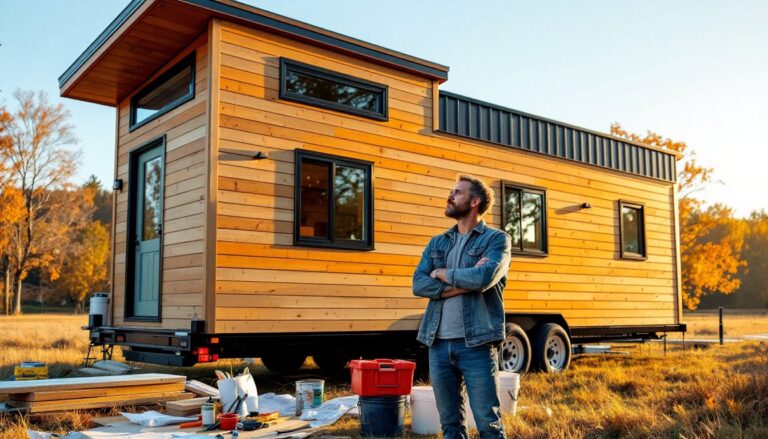
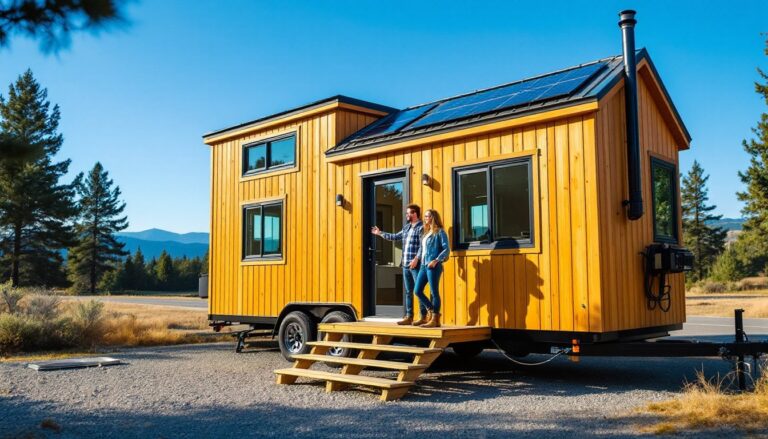
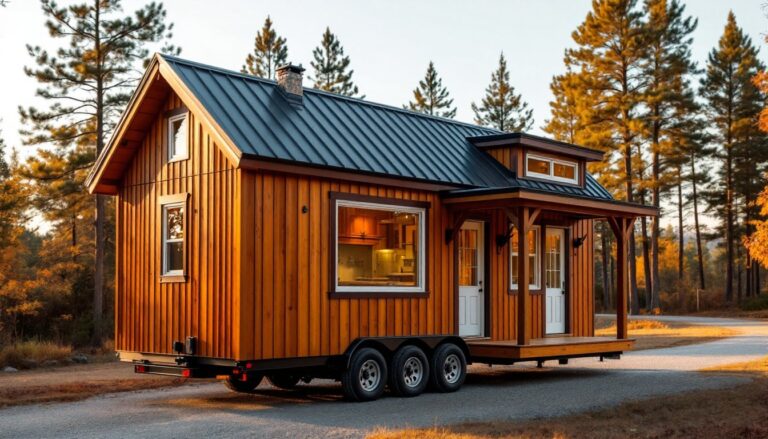
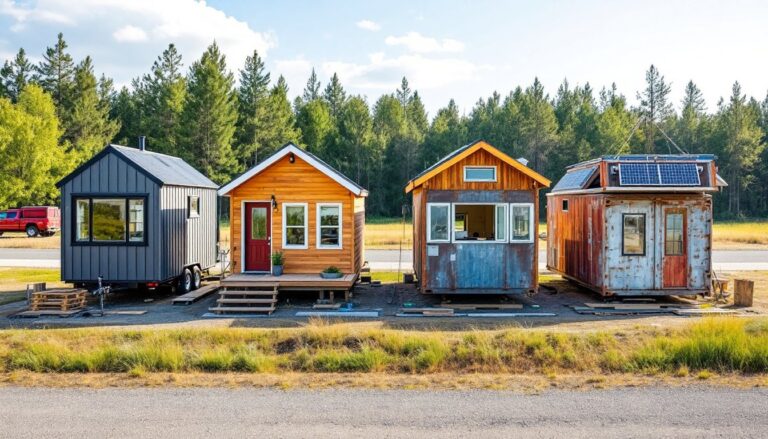
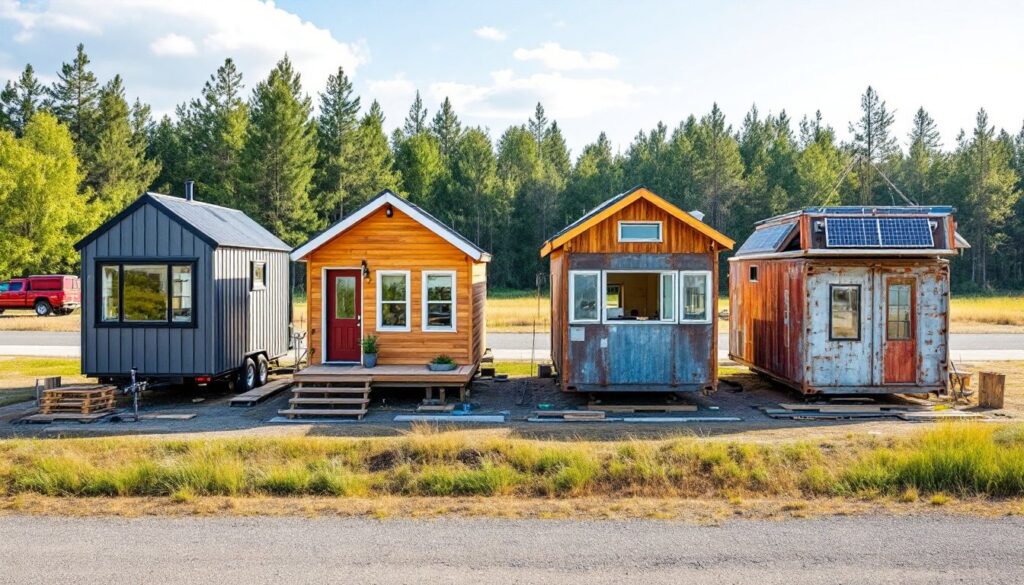
THOWs are built on heavy-duty trailers, typically dual-axle flatbeds rated for 10,000–14,000 lbs GVWR, and classified as RVs or park models rather than real estate. This sidesteps some building codes but introduces towing, parking, and insurance complications.
Typical specs:
- Dimensions: 8’6″ wide (road-legal without oversize permits), 13’6″ tall (max height for most bridges), 20–30′ long.
- Framing: 2×4 or 2×6 stud walls on pressure-treated sill plates, engineered to flex during transport.
- Weight budget: Every pound counts. Use metal roofing, vinyl siding, and SIPs (structural insulated panels) to save weight without sacrificing R-value.
Pros: Mobility, lower upfront cost ($30,000–$80,000 DIY: $60,000–$150,000+ builder-finished), potential to avoid property tax.
Cons: Zoning is a minefield, many cities prohibit permanent THOW parking outside RV parks. Financing is tough: most lenders won’t touch a non-real-estate asset, so expect personal loans or RV loans at higher interest. Towing requires a 3/4-ton or 1-ton truck with brake controllers and weight-distribution hitches. Also, frequent moves stress framing and plumbing connections.
Safety note: Secure all cabinetry and appliances with earthquake latches and L-brackets. Road vibration will loosen anything not fastened.
Foundation-Based Tiny Houses
These are permanent structures on frost-protected shallow foundations (FPSF), slab-on-grade, or pier-and-beam systems. They’re subject to full IRC compliance, which means standard permitting, inspections, and property taxes, but also mortgage eligibility and long-term appreciation.
Common foundation choices:
- Slab-on-grade: Poured concrete with perimeter insulation and vapor barrier. Fast, affordable ($3–$5/sq ft for materials), and ideal for flat lots.
- Pier-and-beam: Treated posts or concrete piers on footings below frost line. Better for sloped sites and easier to level. Leaves room for utilities underneath.
- FPSF: Insulated foundation that reduces excavation depth in cold climates. Requires engineering but saves on concrete.
Framing follows conventional practices: 2×4 or 2×6 walls on 16″ centers, roof trusses or rafters meeting local snow load and wind ratings. Unlike THOWs, you can use standard drywall, tile, and masonry without worrying about road weight.
Pros: Easier financing, appreciation as real property, no mobility headaches, full code compliance means resale confidence.
Cons: Higher upfront costs (permits, inspections, site prep), property taxes, and you can’t move it if zoning changes or you relocate. Plan on $100–$200/sq ft for a quality owner-builder project: pros charge $150–$300+.
Container Homes
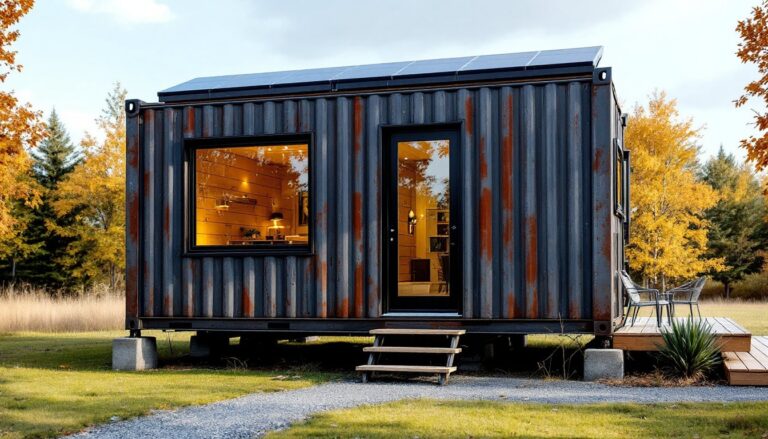
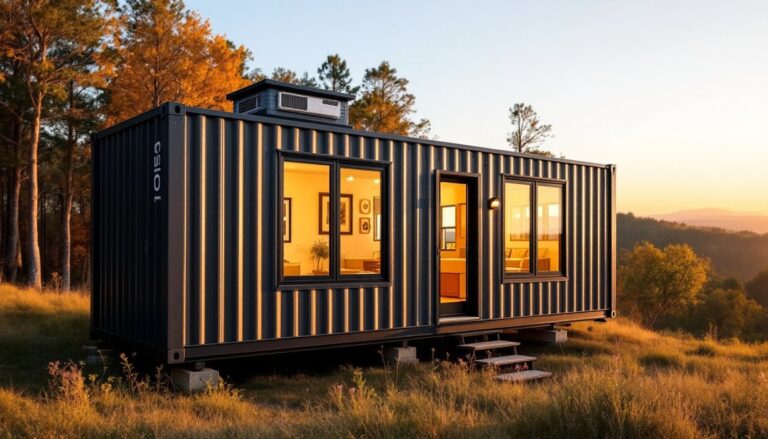
Shipping containers, 20′ (160 sq ft interior) or 40′ (320 sq ft), offer a steel shell and instant structure. They’re trendy, modular, and genuinely useful for remote or industrial sites, but they’re not the budget shortcut Pinterest implies.
Structural reality:
- Containers are strong in compression (stacked) but need reinforcement when you cut openings. Expect to weld in steel headers and king studs around windows and doors.
- Interior width is only 7’8″ after insulating walls with spray foam or rigid board to meet code R-values. That’s tight.
- Floors often contain treated plywood with chemical residues. Strip and replace if using for living space.
Insulation: Steel conducts heat like crazy. Spray foam (closed-cell, R-6 to R-7 per inch) is the go-to, but budget $1.50–$3/sq ft for professional application. Condensation is a real issue without a proper vapor barrier.
Codes and permits: Most jurisdictions treat container homes as standard dwellings. You’ll need engineered drawings, foundation plans, and mechanical/electrical/plumbing (MEP) permits. The design flexibility of containers appeals to architects, but inspectors will scrutinize weld quality and structural modifications.
Cost: Used high-cube containers (9’6″ tall) run $3,000–$6,000 delivered. After insulation, framing out interior walls, MEP, and finishes, total cost per square foot often rivals or exceeds stick-built. They shine for multi-container or off-grid builds where the shell’s durability matters.
Prefab and Modular Tiny Homes
Factory-built modules are delivered 70–90% complete, then craned onto a foundation and finished on-site. They comply with IRC or HUD codes (depending on whether they’re modular or manufactured), and quality control beats most site-built projects.
Modular vs. Manufactured:
- Modular: Built to local IRC codes, placed on permanent foundation, taxed and financed as real property. Common sizes: 12’×20′ to 14’×40′.
- Manufactured (HUD-code): Built to federal standards, can be on permanent foundation or chassis. Some lenders and localities treat them as personal property, complicating mortgages.
Pros: Faster build time (6–12 weeks factory, 1–2 weeks on-site), controlled environment means fewer weather delays and tighter tolerances, and many builders offer turnkey packages with MEP roughed in.
Cons: Delivery logistics, wide loads need route permits and escort vehicles. Site prep (foundation, utilities stubbed to connection points) must be done before delivery. Customization is limited to factory options. Base price ($50,000–$120,000) doesn’t include land, foundation, site work, or utility hookups.
Permits: Treated the same as stick-built if IRC-compliant. Inspectors check the foundation and final connections: the factory modules usually arrive with their own certification tags. Implementing smart space strategies helps maximize every square foot in these compact builds.
Alternative Tiny Home Styles
Beyond the mainstream categories, several niche builds attract DIYers willing to navigate unconventional codes.
Yurts and Canvas Structures:
Traditional yurts use a lattice wood frame and canvas or vinyl skin. Modern versions include insulated panels and windows. They’re fast to erect (1–3 days) and relatively affordable ($5,000–$30,000 kit-only), but most jurisdictions classify them as temporary structures. Permanent placement requires variance or agricultural exemptions. Decluttering essentials become even more critical in circular floor plans with limited storage.
School Bus and RV Conversions (Skoolies):
Retired buses offer standing height and long floor plans (up to 35′). Gut the interior, add insulation (spray foam in ceiling and walls, rigid foam under subfloor), frame out sleeping/kitchen/bath zones, and install 12V or 120V electrical. Challenges include rust remediation, diesel mechanics, and finding legal parking. Registration as an RV or motorhome varies by state.
Earthbag and Cob:
Natural building methods using soil, sand, and stabilizers. Extremely cheap materials but labor-intensive and slow. Code approval is rare without engineered plans. Best for owner-occupied rural land with lenient (or absent) enforcement.
A-Frame Kits:
Iconic triangular profile, simple framing, and efficient snow-shedding. Kits run $20,000–$60,000 for shell only (walls, roof trusses, sheathing). Interior loft space is limited by the steep roofline. Require standard foundation and permits. Comparing tiny homes vs traditional builds reveals how A-frames balance simplicity with code compliance.
Choosing the Right Tiny Home Type for Your Lifestyle
Start with these questions:
- Do you own land with utilities? Foundation builds make sense if infrastructure is in place. THOWs or containers work if you’re leasing a pad or need mobility.
- What’s your local zoning? Call the planning department. Some areas welcome ADUs but ban RVs: others allow park models in designated communities.
- DIY or turnkey? If you’ve got carpentry chops and weekends to spare, stick-built or container projects using the right tools offer the most customization. If time is short, prefab delivers faster.
- Financing and resale: Permanent foundations unlock conventional mortgages and better resale value. Wheeled or non-IRC builds limit your buyer pool.
- Climate and site conditions: Harsh winters demand serious insulation (spray foam, double-pane windows, heat recovery ventilators). Flood zones, high winds, and seismic activity all influence foundation and framing choices.
Safety and code compliance aren’t optional. Even if your county has lax enforcement, building to IRC Appendix Q or RV industry standards (RVIA for THOWs) ensures structural integrity and protects resale. Wear safety glasses, gloves, and dust masks during framing and insulation. If your build involves structural modifications, cutting into container walls, removing bus roof panels, designing custom trusses, get an engineer’s stamp. Inspecting real-world examples can clarify which type suits your skills and budget. Current design trends also show increasing demand for hybrid models combining foundation stability with modular flexibility.
The right tiny home type isn’t about aesthetics or Instagram appeal, it’s about matching construction method, legal status, and site reality to your long-term needs. Take the time to research local codes, calculate true costs (land, permits, utilities, finishes), and decide whether mobility or permanence matters more. A well-planned tiny home delivers financial freedom and intentional living. A poorly chosen one becomes an expensive liability you can’t sell or legally occupy.