Table of Contents
ToggleLowe’s has quietly become a go-to source for people interested in tiny home living, whether they’re buying a prefab structure or gathering materials for a DIY build. The big-box retailer carries everything from turnkey cabin kits to the lumber, fasteners, and finishing materials needed to frame out a custom micro-dwelling. For anyone considering downsizing or adding a backyard ADU, understanding what Lowe’s actually stocks, and what it doesn’t, can save hours of research and prevent costly mismatches between expectations and reality. This guide breaks down the tiny home options available through Lowe’s in 2026, real pricing, material sourcing strategies, and the trade-offs buyers need to know before committing.
Key Takeaways
- Lowe’s offers prefab tiny home kits (80–400 sq ft) ranging from $4,000–$30,000, plus shed conversions, but none are move-in-ready without additional work and cost.
- Tiny homes built with Lowe’s materials require careful planning for foundation, permits, electrical, and plumbing—often adding 50–100% to the initial kit or shed cost.
- Prefab cabin kits and sheds at Lowe’s may not meet local residential building codes; verify local IRC requirements for egress, ceiling height, and insulation before purchasing.
- DIYers with carpentry skills can source all structural, electrical, and plumbing materials through Lowe’s one-stop shopping, including lumber, insulation, and tools for custom tiny home builds.
- Budget 50–100% more than the base structure cost when converting a shed into a code-compliant dwelling, and plan for regional permit variations that can add $2,000–$5,000.
What Tiny Home Options Does Lowe’s Actually Offer?
Lowe’s doesn’t sell factory-built tiny homes on wheels or RV-certified dwellings in the way some specialty dealers do. Instead, it offers prefab kits, shed-to-cabin conversions, and the raw materials to build from scratch. Knowing the difference is critical before placing an order.
Prefab Tiny Home Kits Available at Lowe’s
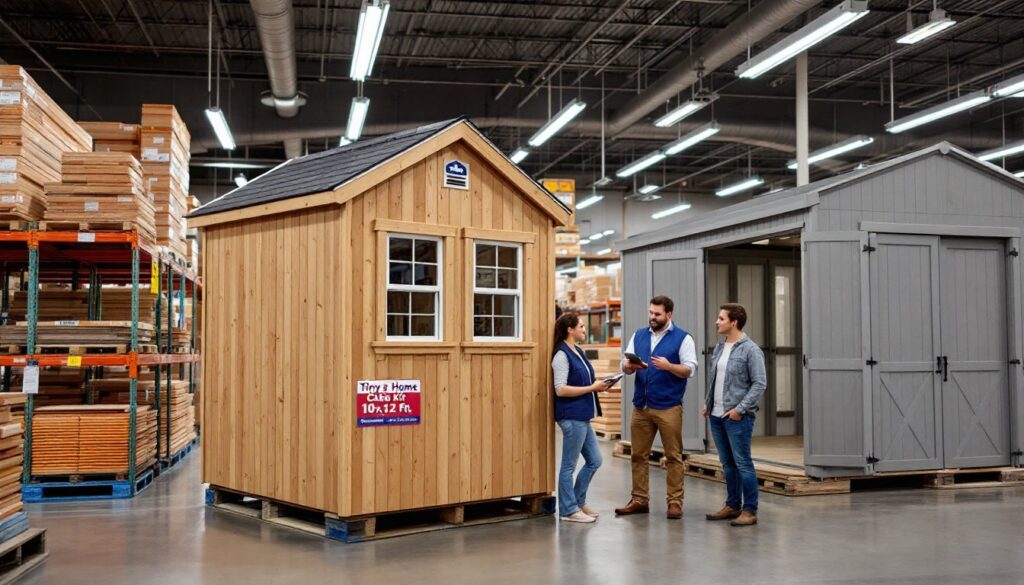
Lowe’s carries a rotating selection of prefab cabin and studio kits, typically ranging from 80 to 400 square feet. These kits include pre-cut framing lumber, wall panels, roof trusses, exterior siding (often T1-11 plywood or LP SmartSide), windows, and doors. Some models come with basic electrical rough-ins, but plumbing and HVAC are almost never included.
Most kits are manufactured by brands like Allwood, Summerwood, or Studio Shed and ship in modular sections. Buyers should expect assembly to take two to four weekends with a helper, depending on experience. Foundation prep, whether a concrete slab, pier-and-beam, or gravel pad, is the buyer’s responsibility and often the most underestimated cost.
Be aware: these structures may not meet residential building codes in all jurisdictions without modifications. If the plan is to use the building as a primary dwelling, check local IRC requirements for egress windows, ceiling height (minimum 7 feet in habitable rooms), and insulation R-values. Many kits are designed as accessory structures and may need upgrades to pass inspection as a legal ADU.
Storage Sheds and Cabins That Can Become Tiny Homes
Lowe’s also stocks a wide range of storage sheds and utility cabins, brands like Heartland, Arrow, and Lifetime, that some buyers convert into livable tiny homes. These range from 64 square feet (8×8) to over 200 square feet (12×20 or larger).
These structures are not tiny homes out of the box. They’re built to shed standards: single-wall construction, minimal or no insulation, no wiring, and often no real foundation anchoring. Converting one into a code-compliant dwelling requires adding stud framing on the interior, insulation (fiberglass batts or rigid foam), vapor barriers, drywall or paneling, electrical wiring per NEC standards, and potentially a separate HVAC solution.
It’s a viable path for someone with carpentry skills, but it’s not turnkey. Budget for the base structure cost plus 50–100% more in materials and labor to make it livable. For those exploring creative design approaches, a shed conversion can offer flexibility, but it’s a full-scale remodel, not a quick setup.
How Much Do Lowe’s Tiny Homes Cost in 2026?
Pricing for Lowe’s tiny home kits and sheds varies widely based on size, materials, and included features. As of 2026, expect the following ranges:
- Prefab cabin kits (80–200 sq ft): $4,000–$12,000
- Larger studio or ADU kits (200–400 sq ft): $12,000–$30,000
- Storage sheds for conversion (64–200 sq ft): $1,200–$6,000
These figures cover the structure only. Foundation, permits, utility hookups, interior finishes, and appliances are separate. For a 200-square-foot cabin kit priced at $10,000, total project cost often lands between $18,000 and $35,000 after factoring in a gravel-and-timber foundation, basic electrical and plumbing rough-ins, insulation upgrades, and finish work.
Regional variation matters. Permit fees in California or New York can add $2,000–$5,000: in rural areas with minimal building oversight, costs may be negligible. Delivery fees for large kits range from $500 to $2,500 depending on distance from the distribution center.
Lowe’s occasionally runs promotions on shed and cabin inventory, especially in late winter and early spring. Financing through the Lowe’s Advantage Card or project loans is available, but interest rates in 2026 average 9–13% APR for unsecured credit, so cash or a home equity line often saves money long-term.
For anyone comparing budget paths, understanding smart cost strategies and weighing upfront material costs against long-term durability is essential.
Building Your Own Tiny Home with Lowe’s Materials and Supplies
For DIYers with carpentry experience, Lowe’s is a one-stop supplier for custom tiny home builds. The store stocks dimensional lumber (both nominal and actual sizes, remember a 2×4 is actually 1.5×3.5 inches), engineered lumber (LVL beams, I-joists), plywood sheathing, house wrap, roofing materials, windows, doors, insulation, drywall, and finish trim.
Framing a tiny home typically requires:
- 2×4 or 2×6 studs for walls (2×6 recommended for better insulation)
- 2×6 or 2×8 floor joists depending on span and load
- Engineered roof trusses or rafters (pre-fab trusses simplify roof framing)
- 7/16-inch or 1/2-inch OSB or plywood sheathing
- House wrap (Tyvek or equivalent) and exterior cladding
- Asphalt shingles, metal roofing, or rubber membrane depending on roof pitch
Lowe’s also carries the hardware: joist hangers, hurricane ties, galvanized nails and screws, construction adhesive, and flashing. For tiny homes built on trailers, the retailer doesn’t stock trailer frames, but it does carry the fasteners and steel anchoring hardware needed to secure the structure to a chassis.
Electrical and plumbing supplies are well-stocked. Expect to find Romex wiring, breaker panels, outlets, switches, PEX tubing, PVC drain pipe, fittings, and basic fixtures. If the build requires compliance with NEC or local codes, a licensed electrician should handle the panel and final connections, but a competent DIYer can rough in wiring and pass inspection with proper permitting.
Insulation options include fiberglass batts (R-13 for 2×4 walls, R-19 or R-21 for 2×6 walls), rigid foam boards, and spray foam kits. For a tiny home, thermal bridging through studs is a real concern, consider adding a layer of rigid foam sheathing on the exterior to boost overall R-value and reduce heat loss.
Lowe’s tool rental department offers essentials like miter saws, table saws, nail guns, and scaffolding. Renting beats buying for one-off projects, and it’s often cheaper than contractor labor if the builder has the skills. For those getting started, learning essential construction methods and having the right tools on hand makes the process safer and faster.
Safety note: Always wear eye protection, hearing protection, and work gloves when cutting, nailing, or handling treated lumber. A dust mask or respirator is essential when cutting PT lumber or working with fiberglass insulation.
Pros and Cons of Buying a Tiny Home Through Lowe’s
Pros:
- One-stop shopping: Lowe’s carries nearly everything needed for a tiny home build or kit assembly, from structural lumber to finish hardware.
- Accessible pricing: Prefab kits and materials are competitively priced, especially during seasonal sales. Bulk discounts and contractor accounts can lower costs further.
- Local pickup or delivery: Most items ship to the store for free, and large orders can be delivered to the job site for a fee. This beats specialty tiny home dealers that may charge steep shipping or require cross-country transport.
- Returnable materials: Unused lumber, fasteners, and fixtures can be returned within 90 days (check current policy), reducing waste and cost overruns.
- Project financing: Lowe’s offers credit options for those who need to spread costs over time, though interest rates vary.
Cons:
- Not turnkey housing: Kits require assembly and often significant additional work to become livable. Buyers expecting a move-in-ready home will be disappointed.
- Limited customization in kits: Prefab models come in fixed sizes and layouts. Custom changes may void warranties or complicate structural integrity.
- Code compliance uncertainty: Many shed and cabin kits are not designed to meet residential building codes. Buyers must verify local requirements and budget for modifications.
- No tiny-home-specific expertise: Lowe’s staff are generalists. For technical questions about trailer-mounted builds, off-grid systems, or composting toilets, specialty dealers or online communities like This Old House forums are better resources.
- Foundation and utilities not included: The kit or materials are only part of the equation. Site prep, foundation, electric service, water, and sewer connections are separate projects that often require licensed contractors and permits.
Anyone weighing these options should also consider how tiny homes compare to traditional builds and whether a prefab kit or DIY approach aligns with their skills, budget, and timeline. Researching current industry trends can also clarify what features and layouts are proving most livable long-term.
For design inspiration and practical layout ideas, resources like Apartment Therapy showcase real tiny home interiors that maximize storage and function in minimal square footage. Similarly, The Handyman’s Daughter offers beginner-friendly tutorials for custom furniture and built-ins that are ideal for small-space living.
Conclusion
Lowe’s isn’t a tiny home dealership, but it’s a practical, affordable source for kits, materials, and tools that make small-space living achievable. Whether assembling a prefab cabin or framing a custom build from scratch, the key is understanding what’s included, what’s not, and what local codes require. Budget realistically, plan for permits, and don’t skip the foundation or insulation. For builders ready to invest the sweat equity, Lowe’s offers a clear path to tiny home ownership without the markups of specialty retailers.