Table of Contents
ToggleJenna Spesard and Guillaume Dutilh weren’t just downsizing when they sold most of their possessions and moved into a 125-square-foot tiny house, they were documenting a radical experiment in simple living. Their blog, Tiny House Giant Journey, chronicled everything from the build process to the realities of living small, and it struck a chord with thousands of people questioning whether bigger really meant better. What started as a personal adventure became a reference point for a growing movement, proving that thoughtful design and intentional living could fit inside a structure smaller than most garages.
Key Takeaways
- Tiny House Giant Journey transformed personal downsizing into a documented movement by combining practical construction advice with honest storytelling, making real tiny home building accessible to thousands of readers seeking financial freedom and intentional living.
- Tiny houses reduce housing acquisition costs from $400,000+ to $20,000-$60,000 while slashing ongoing expenses like utilities and maintenance, enabling owners to save 50-70% of their income compared to traditional homeownership.
- Strategic design principles—vertical space utilization, multifunctional furniture, proper ventilation, and natural light—are essential for making small spaces livable and preventing moisture and claustrophobic issues in a tiny house.
- Before starting a tiny house project, research local zoning codes and building restrictions since most municipalities impose minimum square footage requirements and classify tiny houses on wheels as RVs rather than permanent residences.
- DIY tiny house construction requires 500-1,500 hours over 3-12 months, but testing the lifestyle by renting a tiny home first prevents costly mistakes and helps determine if downsizing aligns with your personal habits and expectations.
- The tiny house movement evolved from economic crisis and environmental concerns into mainstream influence, with design strategies now shaping accessory dwelling units (ADUs) and small-space living approaches across conventional housing.
The Story Behind Tiny House Giant Journey
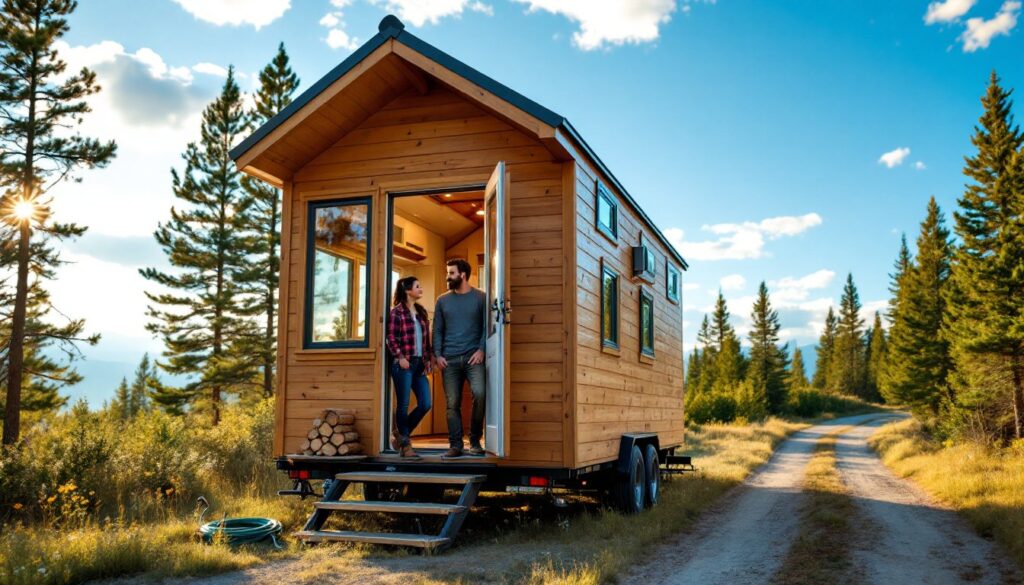
Jenna and Guillaume launched Tiny House Giant Journey in 2013, at a time when the tiny house movement was gaining momentum but still largely unfamiliar to mainstream audiences. The couple designed and built their own tiny house on a flatbed trailer, creating a mobile dwelling that measured just 8 feet wide by 20 feet long. Their home included a sleeping loft accessible by ladder, a compact galley kitchen, a composting toilet, and a multifunctional living area that doubled as workspace and dining room.
The blog became a detailed chronicle of their build process, budget breakdowns, and design decisions. They shared honest accounts of challenges, like managing moisture buildup in a small space, navigating zoning restrictions, and the learning curve of DIY construction without prior building experience. These candid posts resonated with readers who were tired of glossy tiny house features that skipped over the hard parts.
What set their story apart was the combination of practical construction advice and personal narrative. They didn’t just showcase the finished product: they walked readers through material choices, explained why they selected certain tiny house building techniques, and documented mistakes that other builders could avoid. Their transparency about costs, they built their home for approximately $23,000, gave aspiring tiny house dwellers a realistic financial benchmark.
After living in their tiny house for several years and traveling across North America, Jenna and Guillaume’s journey evolved. They eventually transitioned out of tiny house living, but their documented experience remains a foundational resource in the movement.
Why Tiny House Living Captured Global Attention
The tiny house movement gained traction during a period of economic uncertainty and growing awareness about environmental impact. The 2008 financial crisis left many people questioning the American dream of homeownership tied to massive mortgages, while concerns about carbon footprints and resource consumption pushed others toward minimalism.
Tiny houses offered a tangible solution to multiple problems simultaneously. They dramatically reduced housing costs, minimized environmental impact, and forced occupants to confront consumer habits. A typical American home measures around 2,300 square feet and costs over $400,000 in many markets, while a tiny house could be built for a fraction of that and placed on land that didn’t require traditional financing.
Media coverage amplified interest, with television shows romanticizing the lifestyle and social media platforms showcasing beautifully designed micro-dwellings. But beneath the aesthetic appeal, practical factors drove adoption. Young people burdened by student debt saw an escape from rent cycles. Retirees downsized to reduce maintenance and expenses. Remote workers embraced mobility that traditional housing couldn’t offer.
Zoning regulations and building codes presented significant obstacles, though. Most municipalities have minimum square footage requirements for permanent dwellings, typically 120 to 1,000 square feet depending on jurisdiction. Tiny houses on wheels occupy a legal gray area, often classified as recreational vehicles rather than permanent residences, which limits where they can be parked long-term.
Even though these challenges, the movement continues to influence mainstream housing. Accessory dwelling units (ADUs) have gained acceptance in many cities, providing a legal pathway for small secondary structures on residential lots. Architects and builders have adopted space-maximizing strategies from tiny house design, and the emphasis on multifunctional furniture and clever storage has influenced approaches to small-space living across the housing spectrum.
Key Lessons from the Tiny House Giant Journey Experience
Design Strategies for Maximizing Small Spaces
Effective tiny house design prioritizes every square inch. Vertical space becomes critical, lofted sleeping areas free up floor space below for living functions, while wall-mounted shelving and cabinets extend storage upward. Standard residential ceiling heights of 8 feet often increase to 10-13 feet in tiny houses to accommodate lofts without creating claustrophobic lower levels.
Multifunctional furniture is essential, not optional. Tables that fold against walls, storage stairs leading to lofts, and built-in benches with lift-top storage reduce the need for separate pieces. Custom cabinetry typically works better than off-the-shelf options because every dead corner and awkward angle can be utilized. For instance, toe-kick drawers beneath base cabinets capture space that’s usually wasted.
Natural light and sight lines prevent small spaces from feeling cramped. Builders often install larger-than-typical windows, sometimes covering 15-20% of wall space compared to the standard 10%, and use glass doors or interior windows to maintain visual connection between rooms. Light-colored surfaces and reflective materials amplify available light.
Proper ventilation becomes more critical as space shrinks. Without adequate air exchange, cooking moisture, shower steam, and even body heat can cause condensation and mold issues. Many tiny house builders install ERV (energy recovery ventilator) systems or multiple operable windows positioned to create cross-ventilation. The design strategies used in top tiny homes often incorporate these ventilation principles from the planning stage.
Weight distribution matters for tiny houses on trailers. Builders must account for tongue weight (the downward force on the trailer hitch) and axle load limits. Improper weight distribution creates dangerous towing conditions. Heavy items like water heaters and refrigerators should be positioned over or slightly forward of the axles, not at the extreme rear or front of the trailer.
Financial Benefits of Downsizing to a Tiny Home
The most obvious financial advantage is reduced acquisition cost. While high-end tiny houses can exceed $100,000, many owner-builders complete projects for $20,000-$60,000 depending on finishes and whether they hire contractors for specialized work like electrical or plumbing. This compares favorably to median home prices that have climbed above $400,000 in many U.S. markets.
Ongoing expenses drop significantly. Heating and cooling a 100-400 square foot space requires a fraction of the energy needed for conventional homes. Some tiny house dwellers report monthly utility costs under $50, especially when incorporating solar panels or propane appliances. Property taxes on tiny houses parked on rented land or classified as RVs are minimal compared to traditional real estate taxes.
Maintenance and repair costs scale down with square footage. There’s simply less roof to replace, fewer windows to maintain, and less siding to paint. A complete exterior paint job that might cost $5,000-$8,000 for a standard house can often be done for under $500 in materials on a tiny house, assuming DIY labor.
The downsizing process itself often generates cash. Selling furniture, vehicles, and accumulated possessions can fund a significant portion of a tiny house build. Many people following proven tiny home strategies report that decluttering before the move generated $5,000-$15,000.
Reduced housing costs free up income for other priorities, debt payoff, travel, career changes, or retirement savings. Some tiny house dwellers report saving 50-70% of their income compared to previous housing situations. This financial margin creates options that traditional housing expenses often eliminate.
But, financing challenges can offset some advantages. Banks rarely offer traditional mortgages for tiny houses since they’re often not classified as real property. Builders typically use personal loans, RV loans, or pay cash. Interest rates on alternative financing run higher than conventional mortgages, and the lack of home equity appreciation means tiny houses function more like vehicles than appreciating assets.
How to Start Your Own Tiny House Journey
Research local zoning and building codes before committing to a tiny house. Some jurisdictions welcome tiny houses, while others prohibit them outright. Contact the planning department to understand:
- Minimum square footage requirements for dwellings
- Whether tiny houses on wheels are classified as RVs or permanent structures
- Parking regulations for RVs on private property
- Requirements for permanent foundations if building a stationary tiny house
- Permitting processes and inspection requirements
Many builders choose to construct on a trailer to bypass some restrictions, but this creates its own limitations. Trailer dimensions dictate house size, most use 8.5-foot-wide flatbed trailers in lengths from 16 to 24 feet. Road height restrictions (typically 13.5 feet maximum) limit total height including the trailer deck.
Decide whether to build, buy, or hire out. Building allows complete customization and cost control but requires significant time and skill. A DIY build typically takes 500-1,500 hours spread over 3-12 months depending on complexity and builder experience. Purchasing a completed tiny house costs more but eliminates construction learning curves. Budget-conscious builders often compromise by hiring contractors for specialized tasks like electrical or plumbing while handling framing, insulation, and finish work themselves.
The essential tools for tiny home construction include a circular saw or miter saw, drill/driver, level, square, tape measure, and basic hand tools. More advanced builders add nail guns, table saws, and planers. Tool rental makes sense for expensive equipment used briefly.
Start with a detailed plan. While some builders work from rough sketches, most benefit from precise drawings that show framing layout, electrical routing, and plumbing rough-in. Free plans are available from resources like Ana White and various tiny house design sites, or custom plans can be purchased from designers who understand tiny house-specific challenges like weight distribution and road clearance.
Create a realistic budget with 15-20% contingency. First-time builders almost always exceed initial estimates due to design changes, material waste, and unforeseen complications. Track every expense, many successful tiny house dwellers credit their detailed budgeting with keeping projects from stalling mid-construction.
Prioritize quality in critical systems. Cheap windows leak and lose heat. Inadequate insulation creates condensation problems. Substandard framing affects structural integrity. The comparison between tiny homes and traditional construction shows that some building standards can’t be compromised even when square footage shrinks.
Test the lifestyle before committing to a build. Rent a tiny house for a week or month to experience the reality of limited space, creative storage needs, and whether the tradeoffs align with expectations. Many people romanticize tiny living based on carefully curated social media posts, then discover the reality doesn’t match their personality or habits.
Safety considerations apply throughout the process. Wear eye protection when cutting materials, hearing protection with power tools, and dust masks when sanding or working with insulation. Electrical work may require licensed professionals depending on local codes, working with 120V or 240V systems carries serious shock and fire risks. Structural work that affects load-bearing components or trailer attachment points should be reviewed by someone with engineering knowledge.
Conclusion
Tiny House Giant Journey demonstrated that radical downsizing wasn’t just survivable, it could be a deliberate path toward financial freedom and intentional living. The lessons from Jenna and Guillaume’s experience continue to guide builders navigating the practical challenges of small-space construction and the lifestyle adjustments that come with it. Whether someone pursues a full tiny house build or simply applies space-maximizing strategies to a conventional home, the movement’s emphasis on quality over quantity remains its most valuable contribution.